Article · October 29, 2026
Water-Activated Sandbags vs Traditional Sandbags: Storage, Speed, Weight and Reuse
Sandless water-activated bags compared with sand-filled sandbags on storage, deployment speed, weight, reuse and the openings where each one makes sense.
Sandbags are the flood defense most people picture first, and for good reason: they are simple, they work on almost any surface, and they can be stacked into whatever shape the gap needs. The trouble is everything that comes before the stacking. Someone has to find sand, fill the bags, move them and place them, usually in the hours before a storm when time and hands are both short.
Water-activated sandbags take the sand out of that process. This post compares the two on the points that matter when you are deciding what to keep on hand: storage, deployment speed, weight, reuse and where each one fits.
How each one works
A traditional sandbag is a woven bag filled with sand or soil, usually around half to two-thirds full so it can be shaped, then tied or folded closed. Its weight and the way it beds into the bags around it is what holds water back.
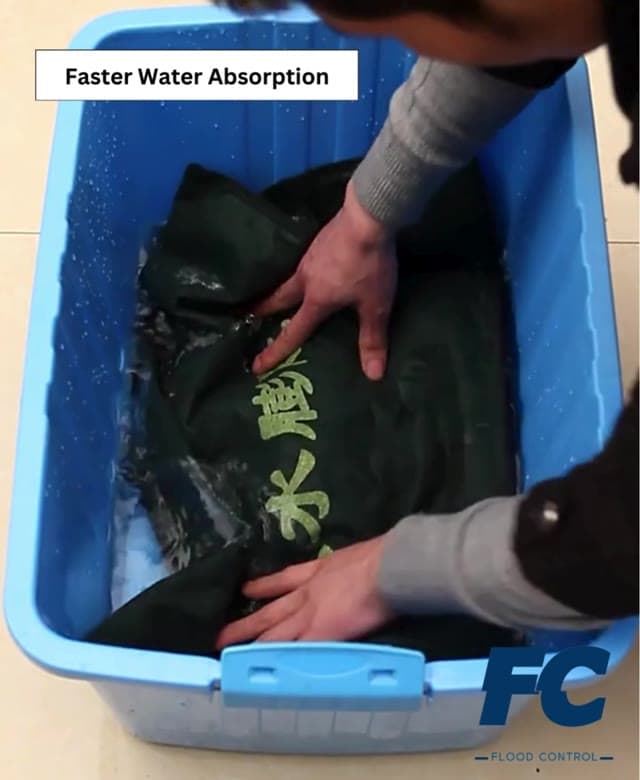
Water-Activated Sandbags arrive flat and dry. Each bag has a super-absorbent sodium polyacrylate core inside a non-woven polypropylene shell with UV protection. On contact with fresh water the core swells, and within 2 to 3 minutes the bag reaches 18 to 22 kg (about 40 to 49 lb) and an activated size of 600 × 400 × 120 mm (about 24 × 16 × 5 in). Bags can be stacked for higher protection.
Storage
This is where the difference is largest. Before activation, each water-activated bag weighs 270 g (about 9.5 oz) and stores flat, so a useful stock fits on a shelf or in a closet near the door it protects.
Traditional sandbags need either a stockpile of sand and empty bags, or bags filled in advance. Filled bags take up a lot of floor space, they are heavy to shift, and they have to be kept somewhere dry if they are going to stay usable. Many buildings simply do not have a place for them, which is why sandbags are so often something people try to source during a storm rather than something they already own.
Deployment speed
With traditional sandbags, the slow part is filling. It needs sand delivered or collected, shovels, and people working in pairs. In an approaching storm, that time is often the time you do not have.
Water-activated bags skip the filling. Lay them where you need them, wet them with fresh water, and they swell in 2 to 3 minutes. At 270 g (about 9.5 oz) each when dry, a stock of bags is easy to carry to the door.
Weight and handling
A filled traditional sandbag is heavy from the moment it is filled, and it stays heavy through every step: carrying it from the pile, lifting it into place and removing it afterwards. Over dozens of bags that is hard physical work, and the risk of strain is real for staff or residents who do not do this kind of lifting regularly.
A water-activated bag is light until it is in position. The 18 to 22 kg weight only arrives once the bag has swollen where it is meant to be, so the heavy lifting is largely avoided during placement.
Reuse and cleanup
Traditional sand-filled sandbags are generally treated as single-use once they have been in floodwater, since the sand can be contaminated. That means a disposal job after the flood, on top of the cleanup.
Water-Activated Sandbags are reusable. They can be used repeatedly, and how many times depends on how they are used. After the first activation they can stay in place outdoors to keep holding back water, which is useful when a wet season brings more than one event.
Side-by-side comparison
| Water-Activated Sandbags | Traditional sandbags | |
|---|---|---|
| Storage | Flat, 270 g (about 9.5 oz) per bag | Sand stockpile and empty bags, or bulky filled bags |
| Preparation | None; activates on contact with fresh water | Filling with sand or soil, shovels and labor |
| Time to ready | 2 to 3 minutes after wetting | Depends on sand supply and people available |
| Weight when carried | Light, until activated in place | Heavy throughout |
| Activated weight | 18 to 22 kg (about 40 to 49 lb) | Varies with fill |
| Reuse | Reusable; how many times depends on use | Generally single-use after floodwater |
| Outdoor exposure | UV-protected shell; can stay in place after activation | Depends on bag material |
Where each one fits
Water-activated sandbags suit
- Doorways, garage doors, shopfronts and other low entry points where a small, ready stock can sit nearby.
- Gaps and low points around other barriers, such as the edges of a portable barrier line or a drain opening at a threshold.
- Buildings with little storage space and few people available to fill and move bags.
- Offices, shops, schools and apartment buildings that want something staff can deploy themselves.
Traditional sandbags suit
- Long temporary lines along open ground where sand and machinery are on hand.
- Large community efforts where many volunteers and a sand supply are already organized.
Where sandbags of any kind stop being the answer
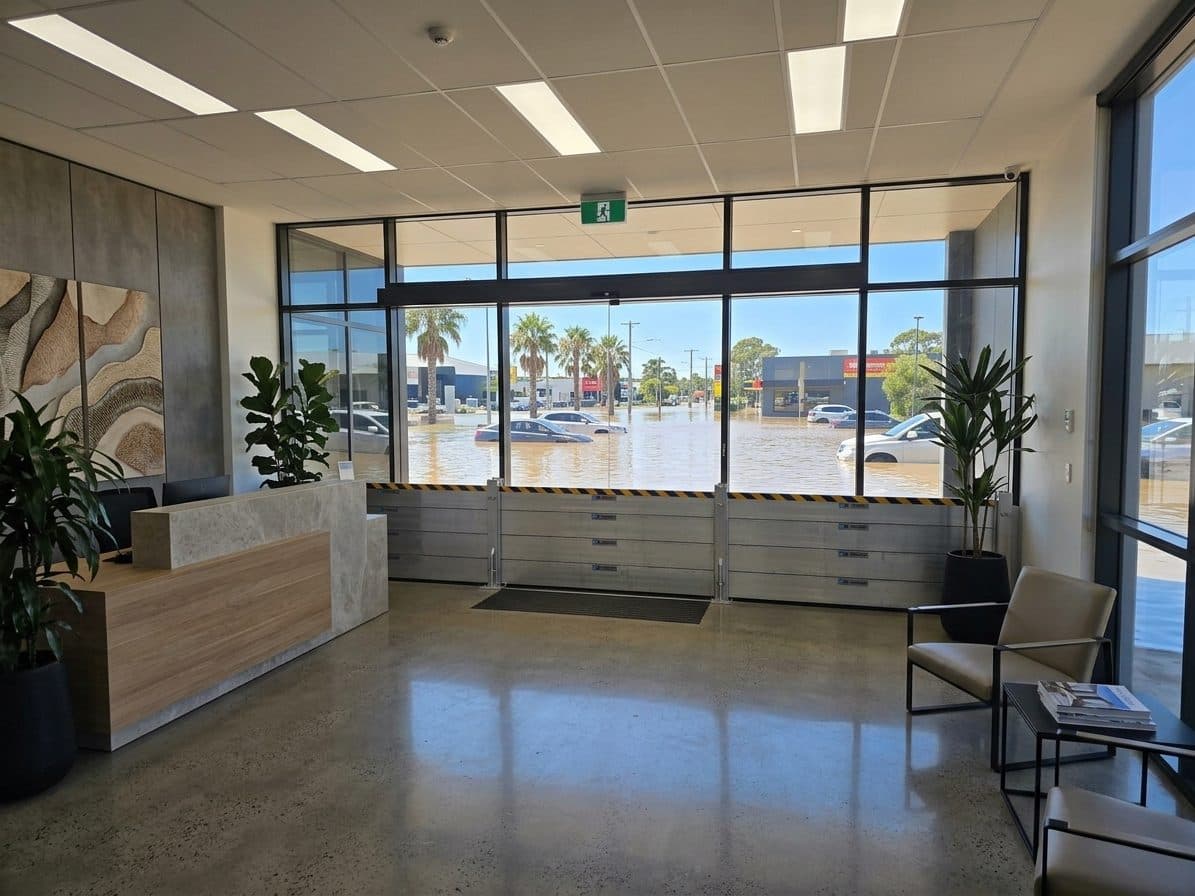
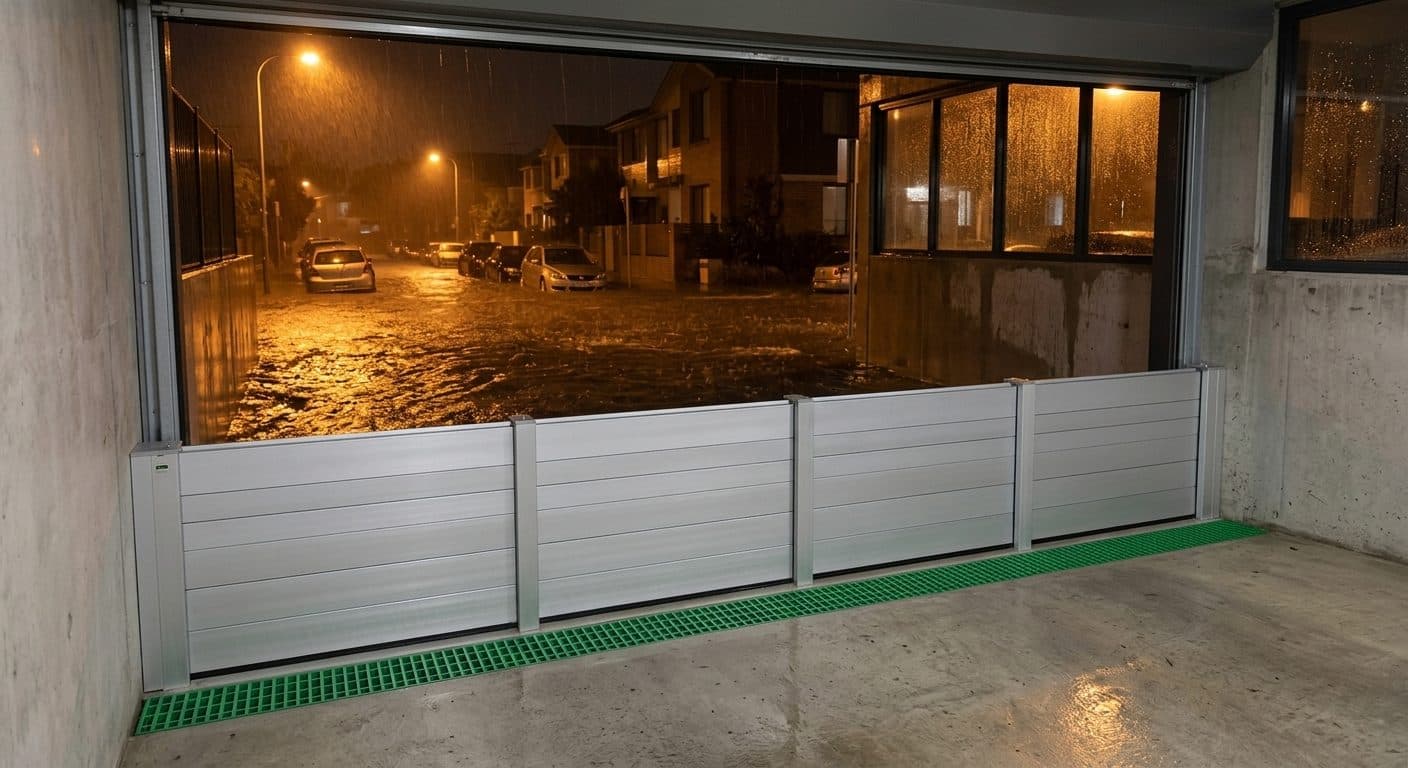
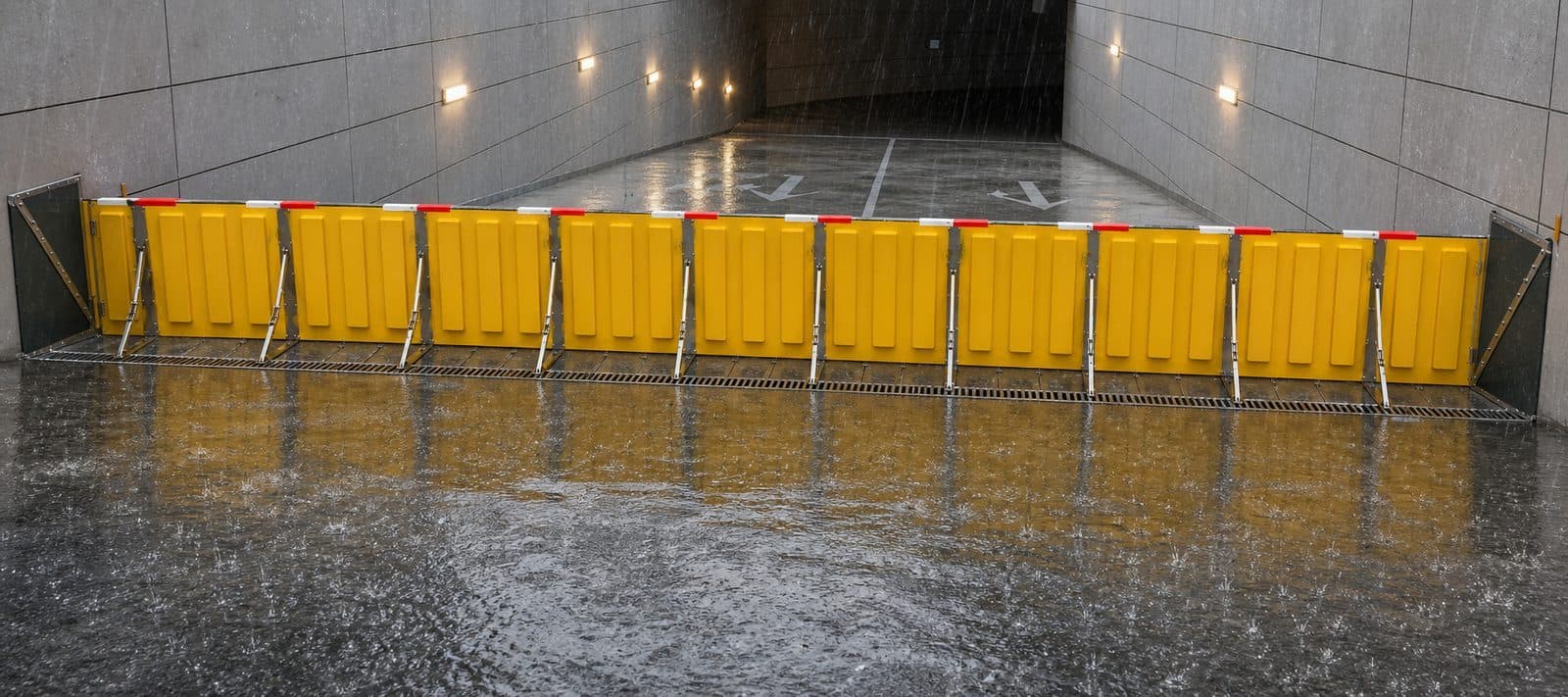
Sandbags are a short-notice tool. If the same door floods every wet season, or if the opening is a parking garage entry or a wide loading dock, a dedicated barrier is usually the better long-term choice. Aluminum Flood Barriers are made to measure for doors and entrances, the Hydrodynamic Passive Flood Barrier operates on its own at parking entries and ramps, and ABS Portable Flood Barriers cover wide openings without fixing anything to the building. Many sites keep water-activated sandbags alongside these for the gaps. No barrier prevents all flood damage, so pumping and drainage still belong in the plan.
Ordering
Every order goes through a quote, including larger orders for a whole building or a portfolio of sites. Bulk purchase discounts are available. Send the number of bags you need and the delivery location through our contact page. Flood Control is based in Sydney, Australia and supplies projects worldwide.
Recommended next step
Match the guide to a flood barrier option.
These are the product pages and guides most relevant to this topic. Use them to compare the options, then send us your openings for a recommendation and a quote.