
Applications

Flood Protection for Loading Docks and Warehouses

Warehouses have wide roller doors and level loading bays that trucks and forklifts cross all day, and stock often sits on the floor just inside. These are the barriers we suggest for those openings.

Request a QuoteView Products
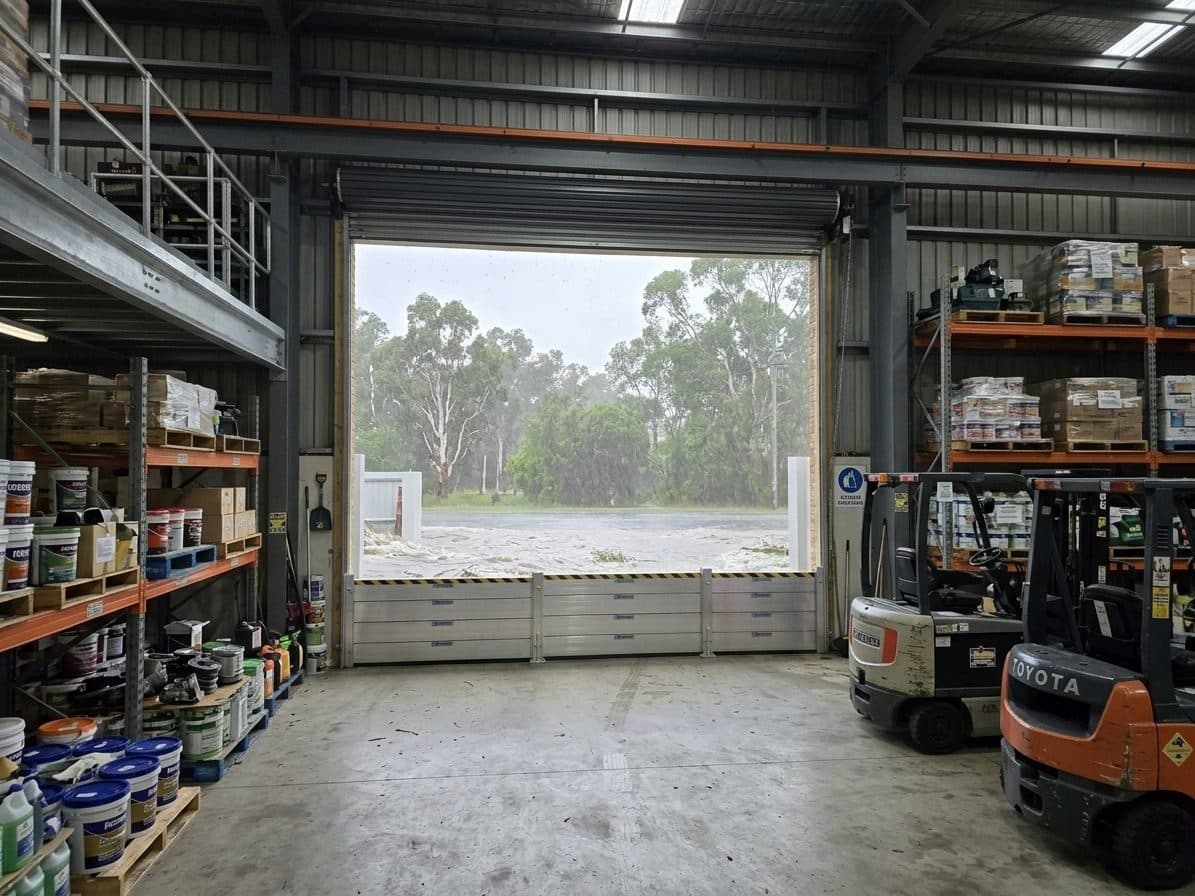
Aluminum flood panels across an open roller door inside a warehouse, with floodwater in the yard outside

Where water gets in

The openings to plan for

  • Wide roller doors and loading bays set level with the yard
  • Vehicle and forklift crossings where the floor and the yard meet
  • Recessed or ramped loading docks that collect yard runoff
  • Personnel doors and office entries beside the bays

Barriers that suit this site

Products to consider

Aluminum Flood Barriers

Aluminum Flood Barriers

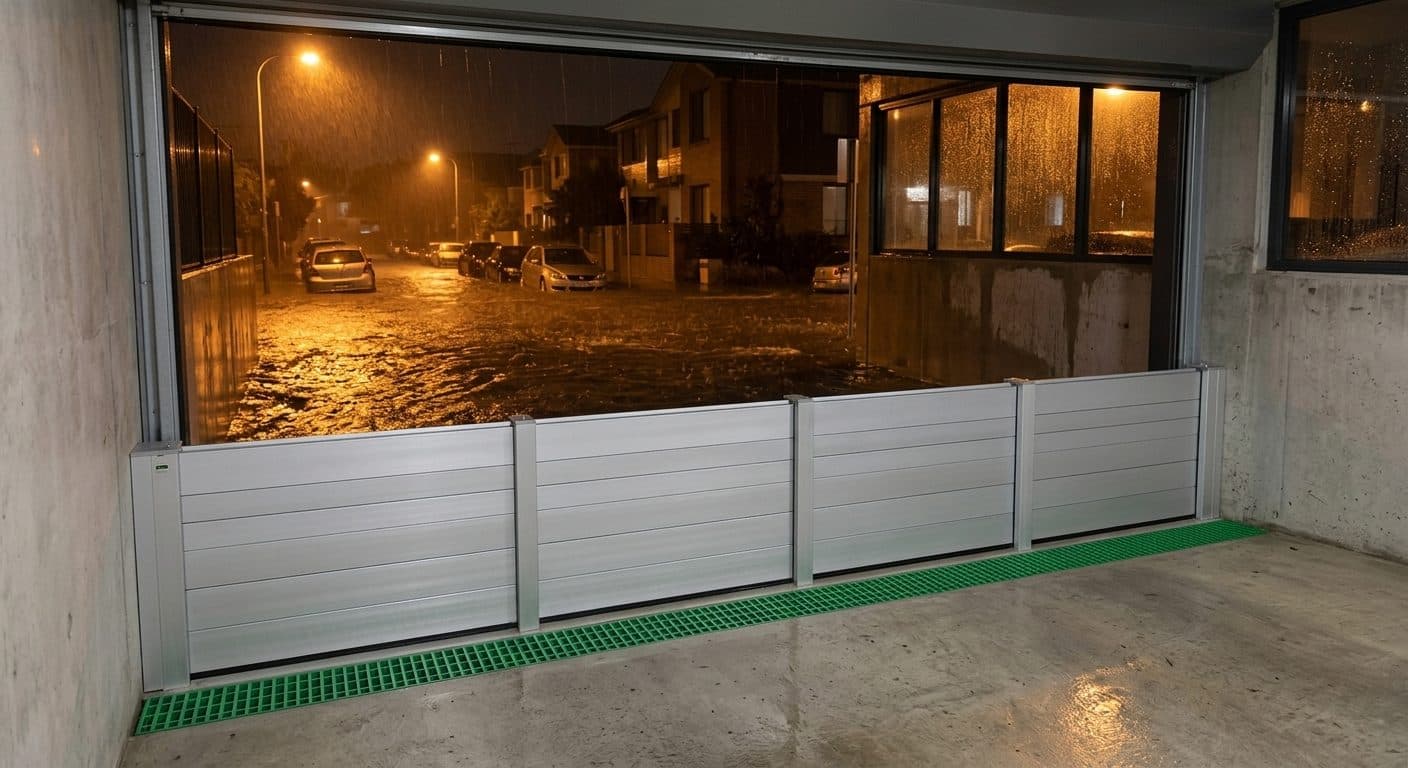
Each set is made to the width of the door, with panels stacked in 200 mm (about 8 in) increments up to 2,000 mm (about 6.5 ft). The panels lift straight out after the event, leaving the bay clear for loading.

Best for: Roller doors and loading bays

View Aluminum Flood Barriers →
Hydrodynamic Passive Flood Barrier

Hydrodynamic Passive Flood Barrier

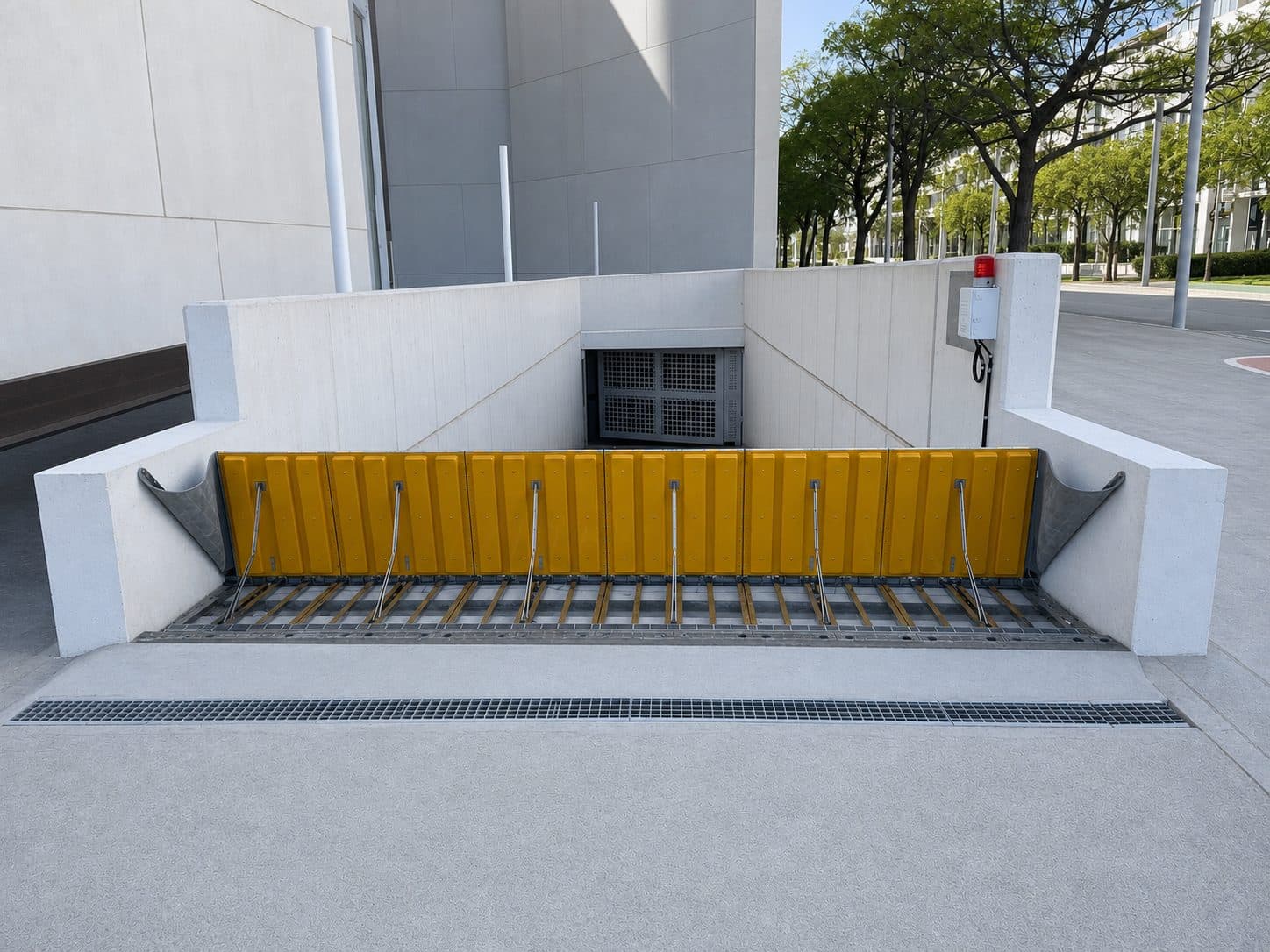
Lowered, it is trafficable to 20 tonnes GVM (about 44,000 lb), so vehicles and forklifts cross it as normal. Floodwater lifts the panel by buoyancy, so it closes the crossing at night and on weekends with no one on site.

Best for: Vehicle crossings used every day

View Hydrodynamic Passive Flood Barrier →
ABS Portable Flood Barriers

ABS Portable Flood Barriers

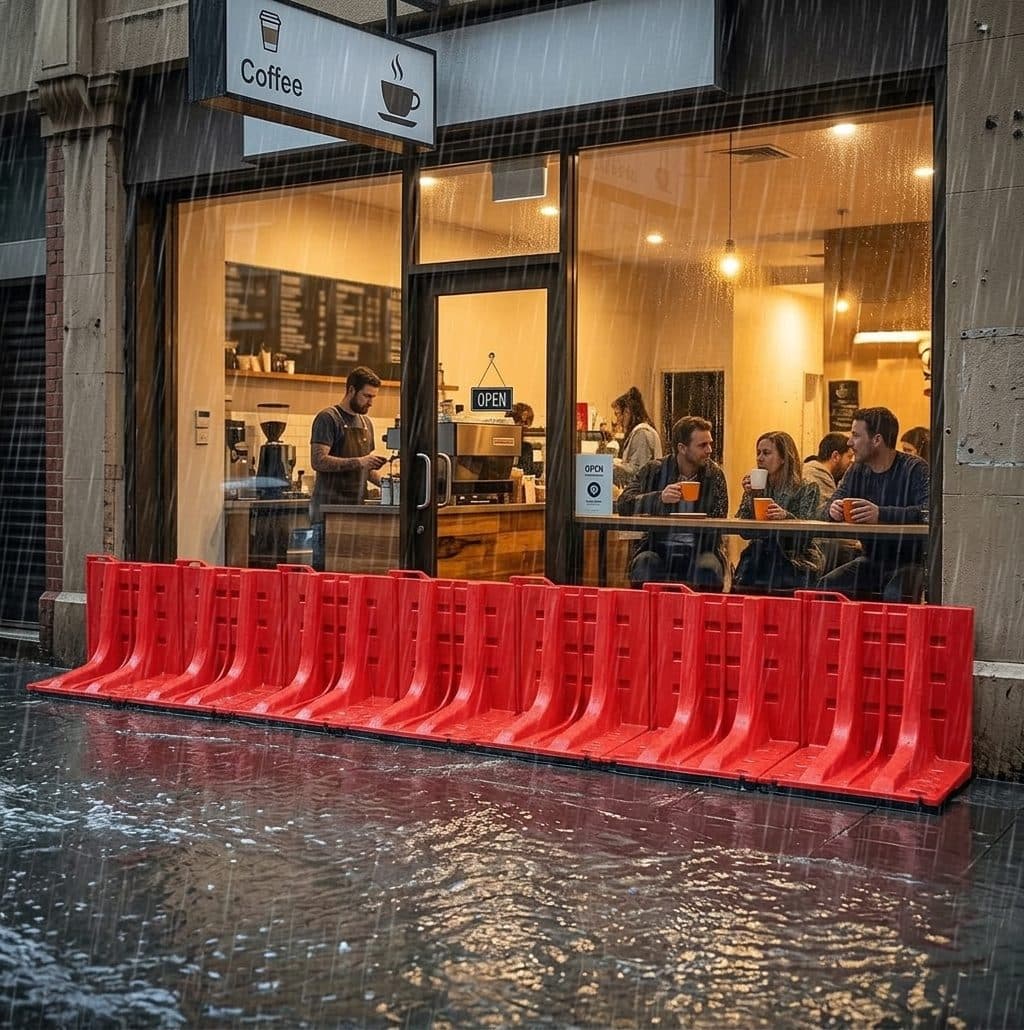
Nothing is fixed to the building: the L-shaped panels are set down across the opening, lock together by hand and are held down by the weight of the water on their base. They come in 750 mm, 1,000 mm and 1,200 mm heights (about 30, 39 and 47 in), hold back and divert water, and some seepage can occur.

Best for: Leased buildings and temporary cover

View ABS Portable Flood Barriers →

Choosing between them

For a roller door that stays shut overnight, aluminum panels are the usual fit. Someone has to put them in, which takes one person under 10 minutes per set, so they suit sites with staff who can respond to a warning.

Where vehicles cross the opening all day, or the site is empty at night, a passive barrier means nobody has to be there. It sits in a shallow recess, or it can be surface-mounted on an existing slab with a ramp on each side.

ABS panels suit tenants who cannot fix anything to the building, and sites that want a stock of barriers to move between doors. Because some seepage can occur, it helps to keep stock off the floor near the door or have a pump ready on the dry side.

What we need to quote

  • Width and height of each opening
  • Photos of each opening and the ground on both sides
  • How high the water has reached before, or the flood height to plan for
  • Whether power is available at the opening, and what traffic crosses it
  • The city and country of the site
Request a Quote →

FAQ

Questions we hear about loading docks and warehouses

Can trucks drive over the passive barrier?
When fully lowered it is trafficable to 20 tonnes GVM (about 44,000 lb). If heavier vehicles use the crossing, tell us when you request a quote so we can check what is likely to suit the site.
How wide an opening can an aluminum barrier cover?
There is no standard size, because each set is made to the measured opening. Send us the width and height of each door and we will work out the layout for your site.
Will ABS panels stay in place on a smooth warehouse floor?
The panels are held down by the weight of the floodwater on their base, and seal strips run along the underside and side edge of each one. They hold back and divert water and some seepage can occur, so they suit sites that can manage a small amount of water inside.

Send the opening sizes and a few photos.

We reply within 1 business day with a recommendation for each opening and a quote for the whole site.

Request a Quote