
Applications

Flood Protection for Underground Parking Garages

An underground parking garage or basement car park sits below the street, so water running down the entry ramp has nowhere to go except in. These are the barriers we propose for ramps, vehicle entries and the pedestrian doors beside them.

Request a QuoteView Products
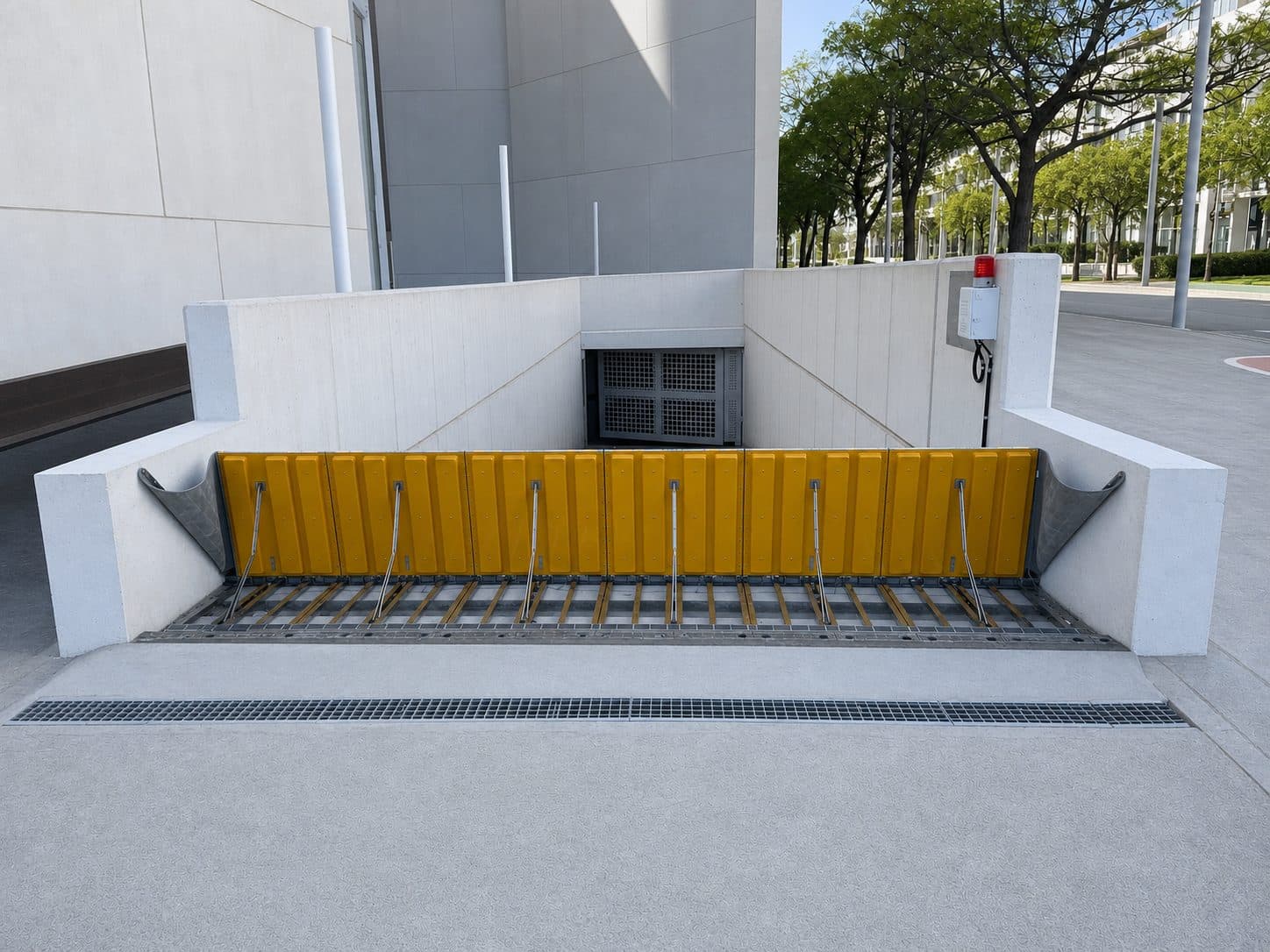
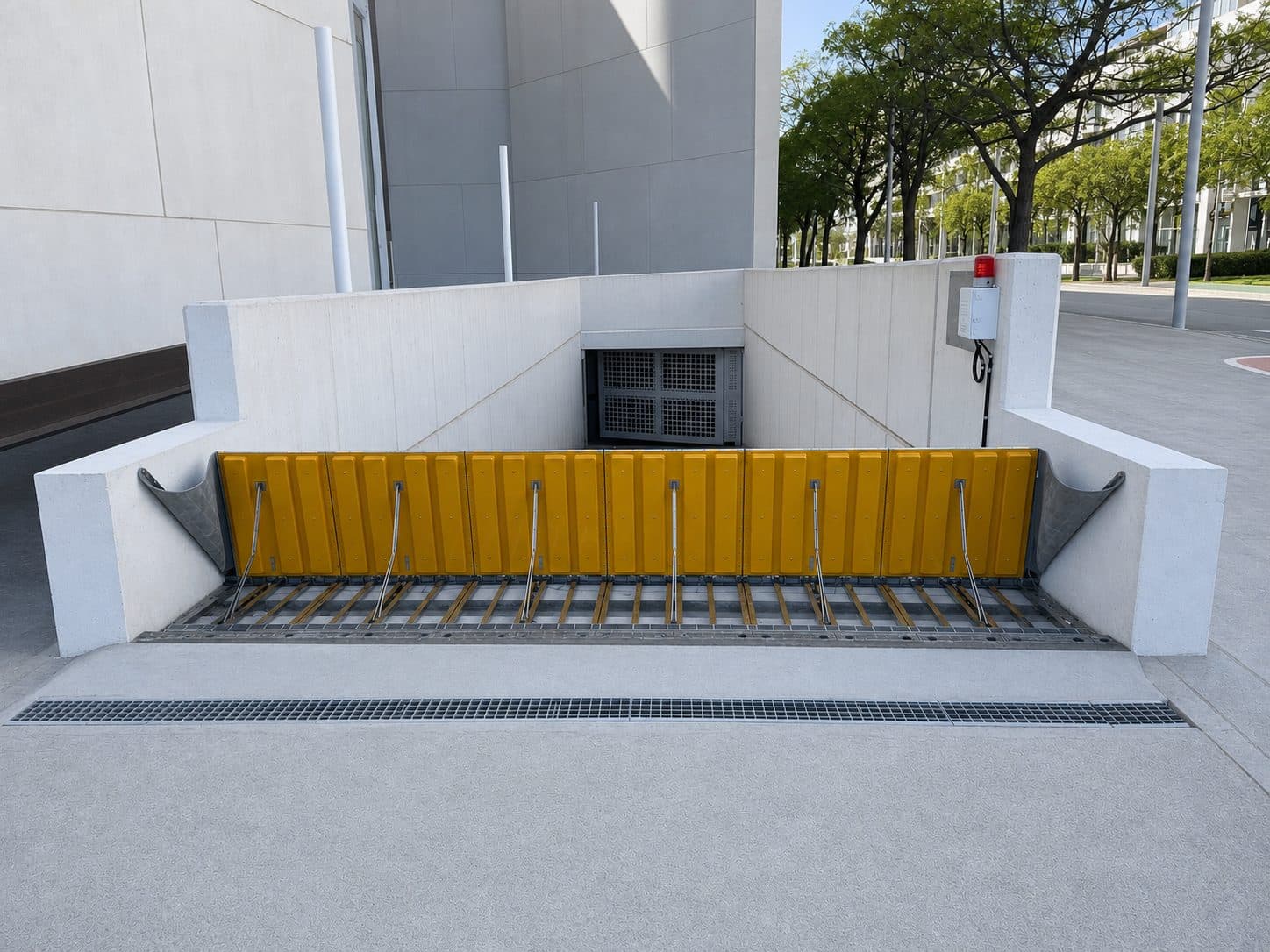
Yellow passive flood barrier raised across the top of an underground parking ramp, with an alarm beacon on the side wall

Where water gets in

The openings to plan for

  • The vehicle ramp, where street runoff and overland flow run straight down to the lowest level
  • Pedestrian doors and stair entries that open from street level into the garage
  • Ventilation openings and grilles set low in the facade or the ramp walls
  • Drains and sumps that can back up when the stormwater system downstream is full

Barriers that suit this site

Products to consider

Hydrodynamic Passive Flood Barrier

Hydrodynamic Passive Flood Barrier

The panel lies flush across the ramp and is lifted by the floodwater itself, so it needs no power supply and nobody on site. Lowered, it is trafficable to 20 tonnes GVM (about 44,000 lb), and it settles back under its own weight as the water recedes.

Best for: Ramps with no one on site overnight

View Hydrodynamic Passive Flood Barrier →
Automatic Flood Barrier System

Automatic Flood Barrier System

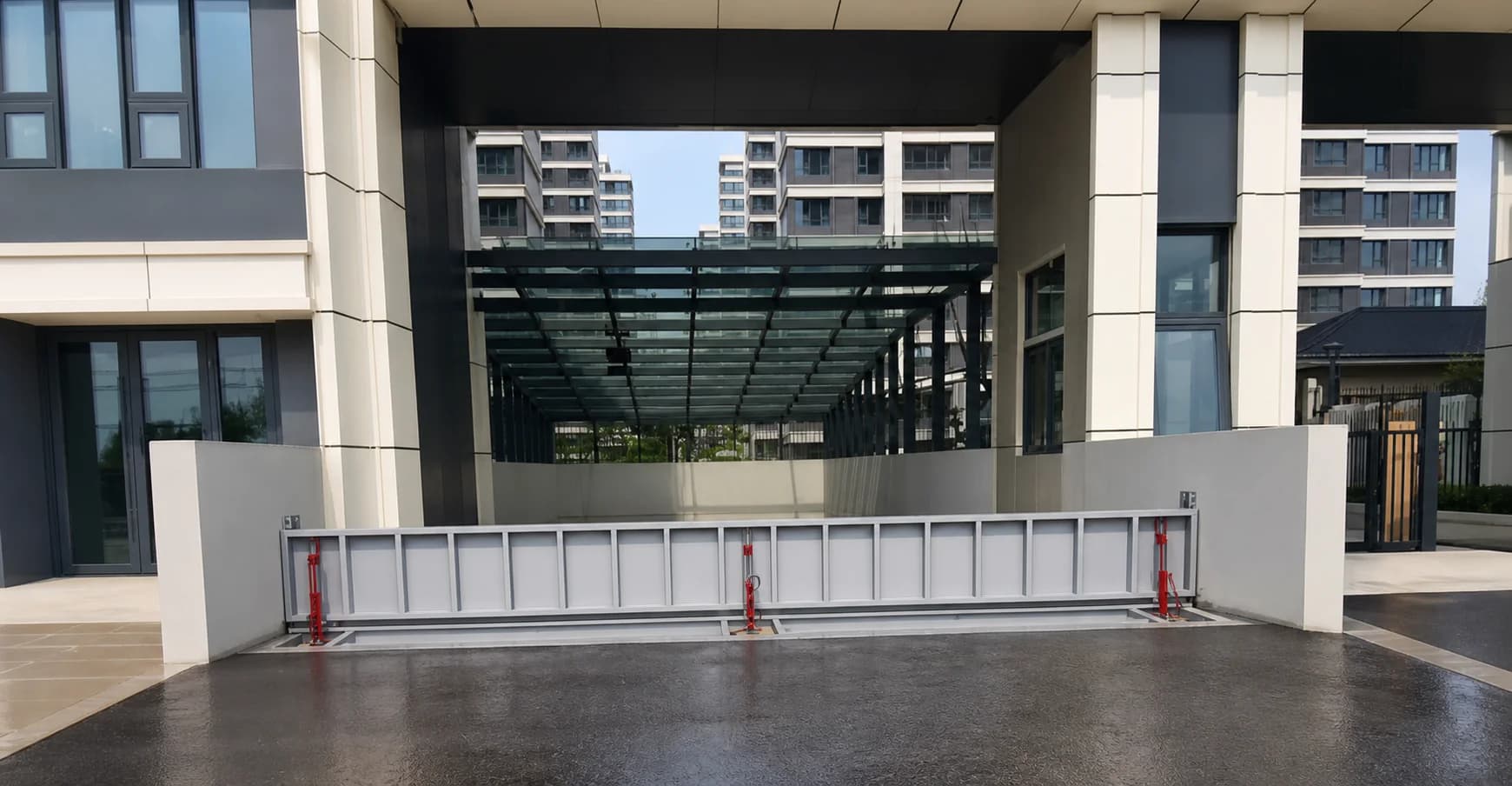
Water-level sensing starts an electrically powered hydraulic pump that raises the barrier at a set activation level. The top can be paved to match the driveway, and the barrier is lowered and reset by remote control or a central control switch.

Best for: Garages with a building control system

View Automatic Flood Barrier System →
Aluminum Flood Barriers

Aluminum Flood Barriers

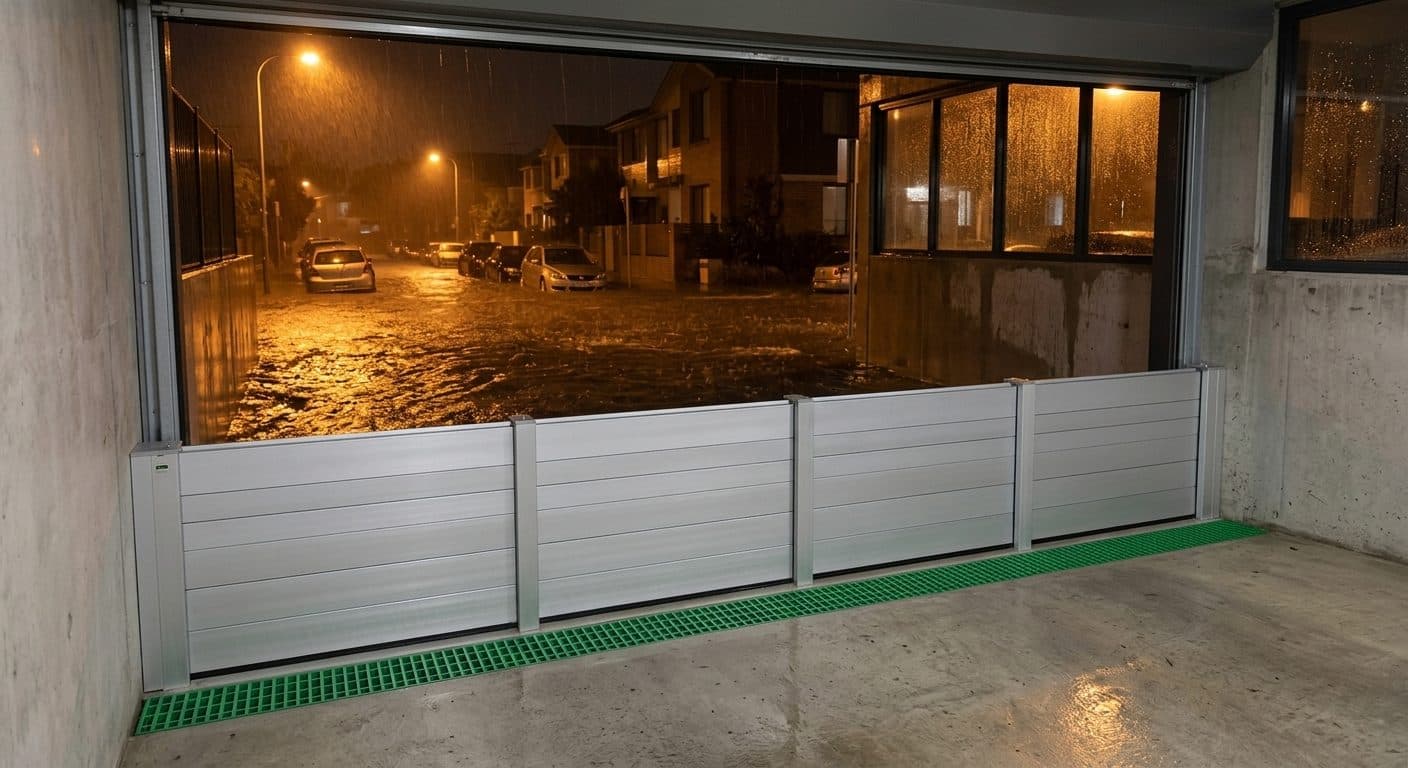
Demountable panels drop into side channels by hand, and one person can fit a set in under 10 minutes. Each set is made to measure in 200 mm (about 8 in) panels up to 2,000 mm (about 6.5 ft) high, with rubber seals clamped against the frame and floor.

Best for: Pedestrian doors and stair entries

View Aluminum Flood Barriers →

Choosing between them

The ramp is the main decision. A passive barrier works with no power and no operator, which suits garages that are empty at night or on weekends. An automatic barrier raises itself using sensors and a hydraulic pump, and fits sites with a building management or security team that can control it remotely.

Both sit in a shallow recess rather than a deep pit. On an existing garage the passive barrier can also be surface-mounted with a ramp on each side, which avoids cutting into the slab.

Aluminum panels cover the smaller openings around the ramp. Someone has to fit them before the water arrives, so they suit doors that staff or residents can reach within a few minutes of a warning.

What we need to quote

  • Width and height of each opening
  • Photos of each opening and the ground on both sides
  • How high the water has reached before, or the flood height to plan for
  • Whether power is available at the opening, and what traffic crosses it
  • The city and country of the site
Request a Quote →

FAQ

Questions we hear about underground parking garages

Can vehicles drive over the barrier every day?
Yes. The passive barrier is trafficable to 20 tonnes GVM (about 44,000 lb) when lowered, and the automatic barrier rests flush with the ground for normal vehicle and pedestrian access. Tell us which vehicles use the ramp when you request a quote so we can check the fit.
What happens if the power goes out during a storm?
The passive barrier is raised by the floodwater and needs no power to operate. The automatic barrier needs an electrical supply for its pump and controls, so it is worth asking your electrical designer how backup power would be provided on your site.
How high can the barrier be?
The passive barrier gives from 0.6 m to 1.2 m (about 2 ft to 4 ft) of protection height, and aluminum sets go up to 2,000 mm (about 6.5 ft). The right height depends on the flood level expected at your entrance, which your engineer or a flood report can usually tell you.
What do you need to prepare a quote?
The ramp width, photos of the entrance from the street and from inside, the flood depth you want to protect against, and whether power is available nearby. Every barrier is quoted for its opening once we have those details.

Send the opening sizes and a few photos.

We reply within 1 business day with a recommendation for each opening and a quote for the whole site.

Request a Quote