
Applications
Flood barriers by site type.
Each kind of site floods in its own way. Here is the barrier that suits each opening, from parking ramps to shopfronts and waterfront paths.
Commercial and infrastructure
Offices, shops, warehouses and public buildings.
Commercial sites have wider openings, more of them, and often one person to close them all before the water arrives.
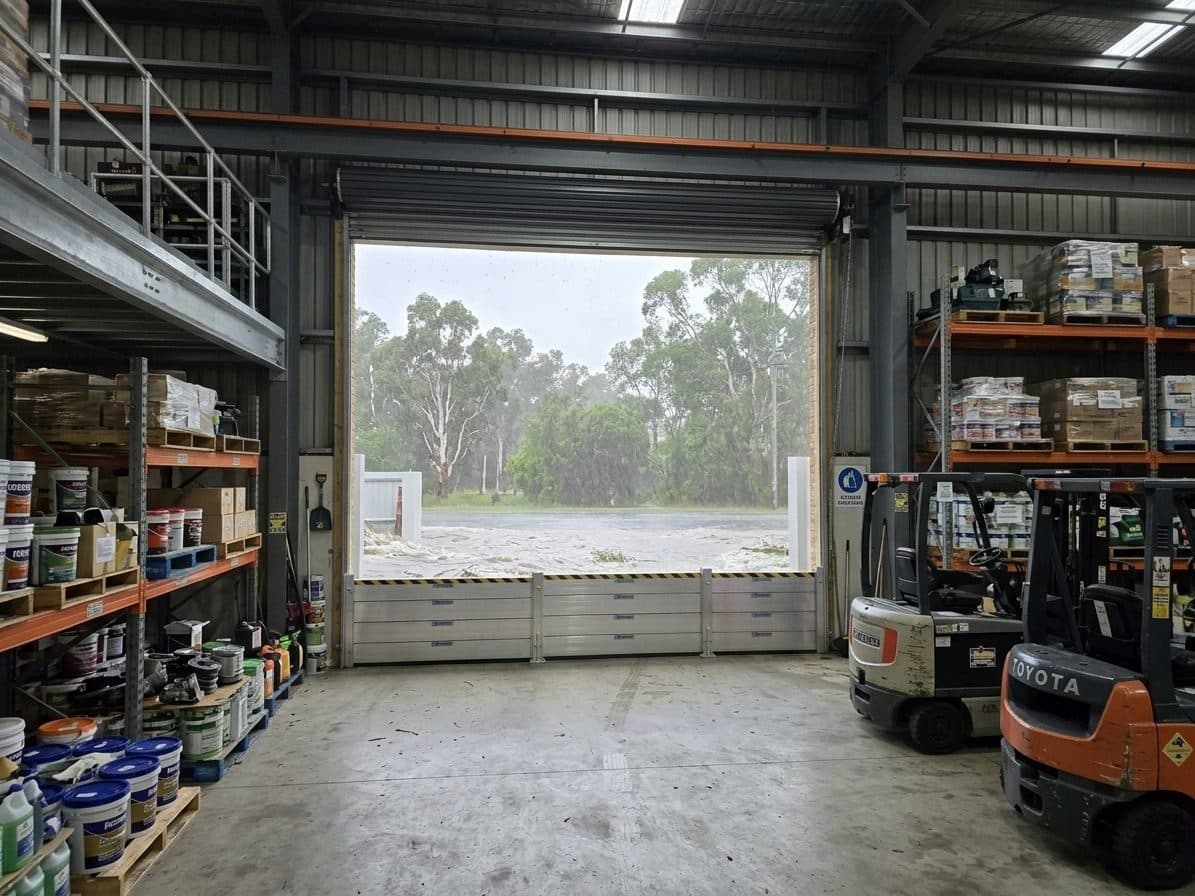
Loading docks and roller doors
The widest openings on the site. Aluminum sets are made to measure for each opening and lift out between events.
Aluminum flood barriers →
Retail shopfronts
Glazed frontages, often on leased premises. Aluminum sets fit between posts at each side of the opening; where nothing can be fixed to the building, ABS portable panels stand freely across it.
Aluminum flood barriers →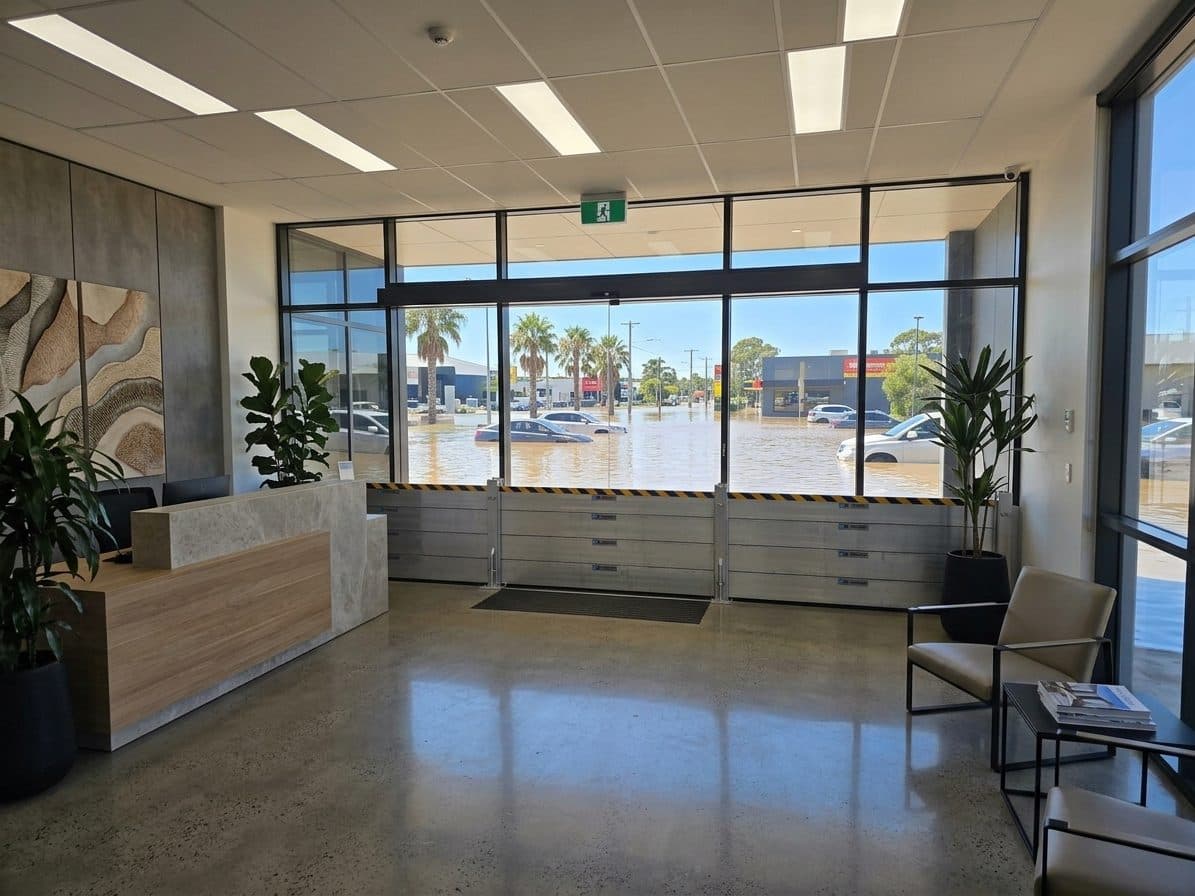
Offices, hotels and lobbies
Ground-floor entries in front of elevators, switchboards and server rooms. Aluminum panels close the doorway with rubber seals clamped against the frame and floor.
Aluminum flood barriers →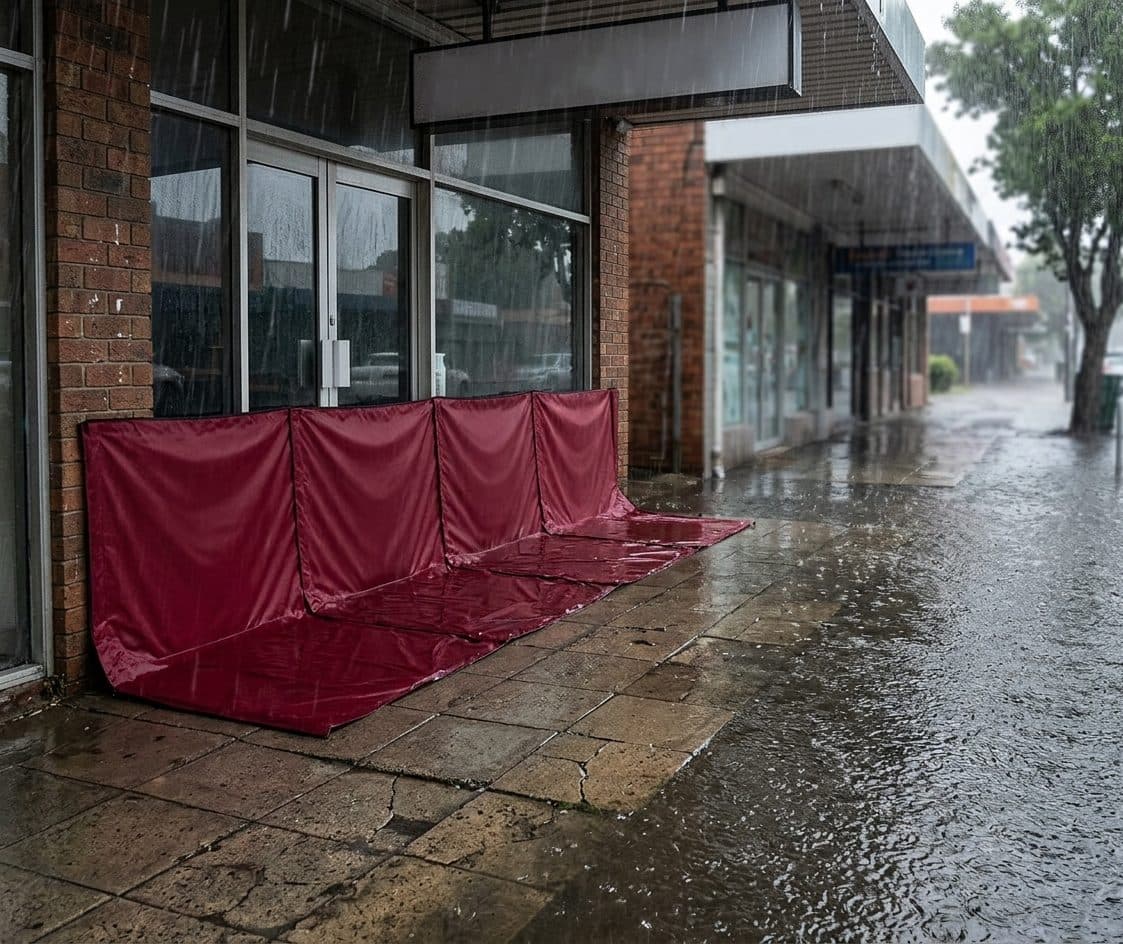
Cafés and hospitality
Standard doorways where one staff member has a few minutes. Oxford barriers set up without tools and store flat until the warning comes.
Oxford barriers →
Schools and public buildings
Several buildings and several entries. Each opening is specified separately, and portable panels are stored near the opening they serve.
ABS portable barriers →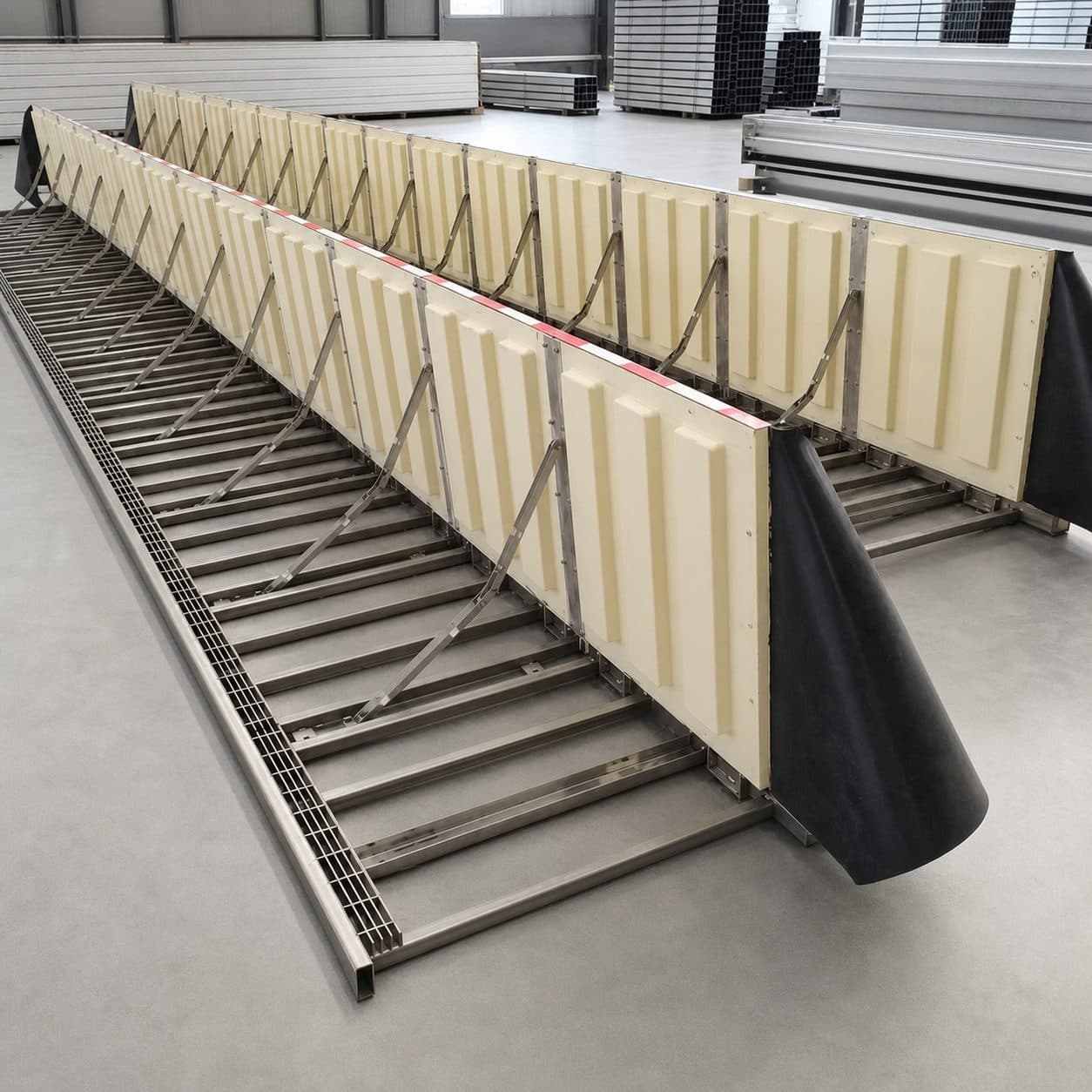
Utility and industrial sites
Critical equipment, multiple access points and no operator. Passive barriers rise on the floodwater's own buoyancy and lower under their own weight.
Hydrodynamic passive barriers →Parking garages and basements
Ramps and entrances that lead below ground.
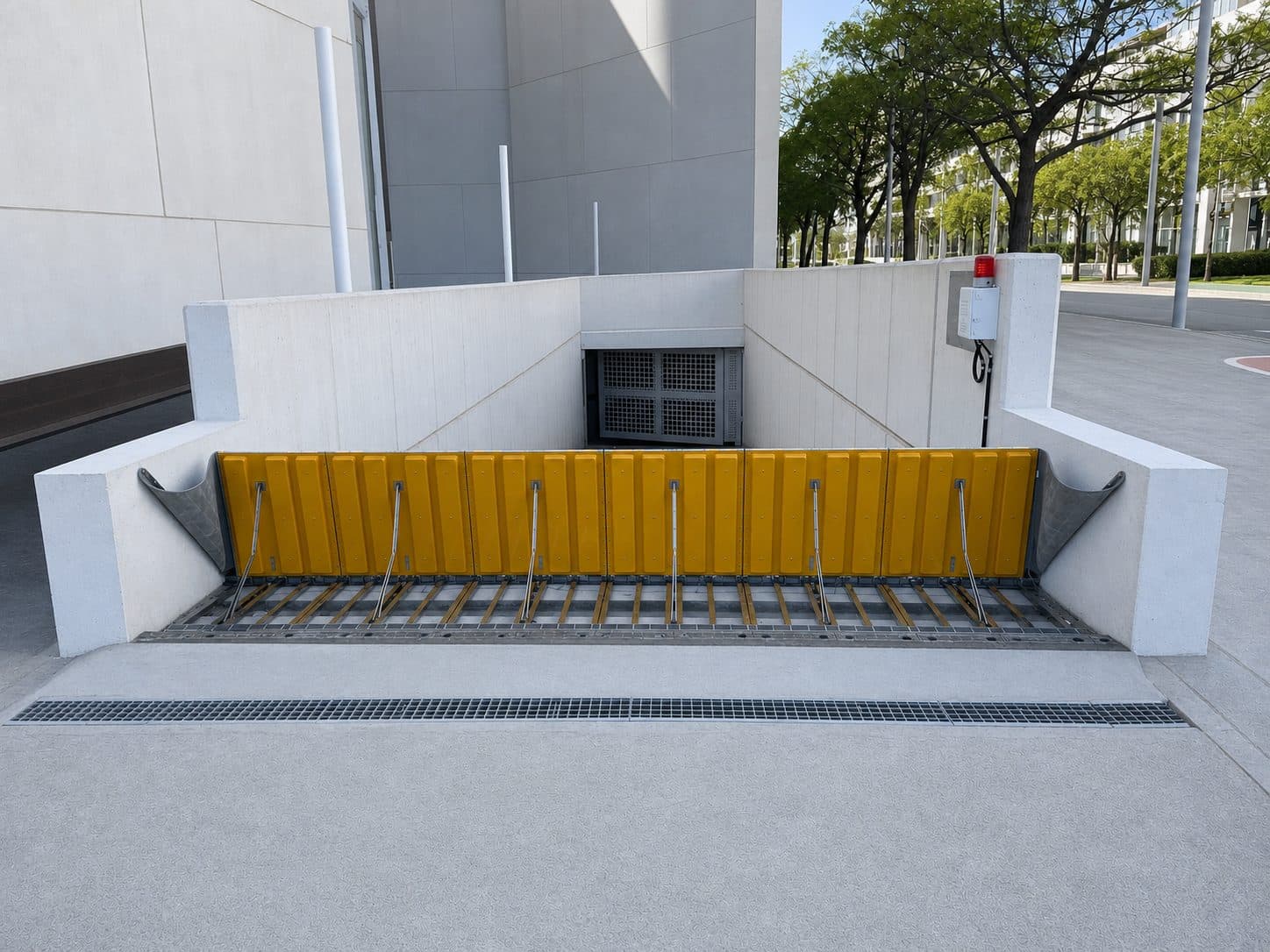
A ramp collects everything the street sheds and runs it down to the plant rooms, switchboards and vehicles below. Protection goes at the top of the ramp.
Underground parking entrances
The passive barrier lies flush with the driveway and is raised by the floodwater itself, so it works at night, on weekends and in a blackout.
Hydrodynamic passive barrier →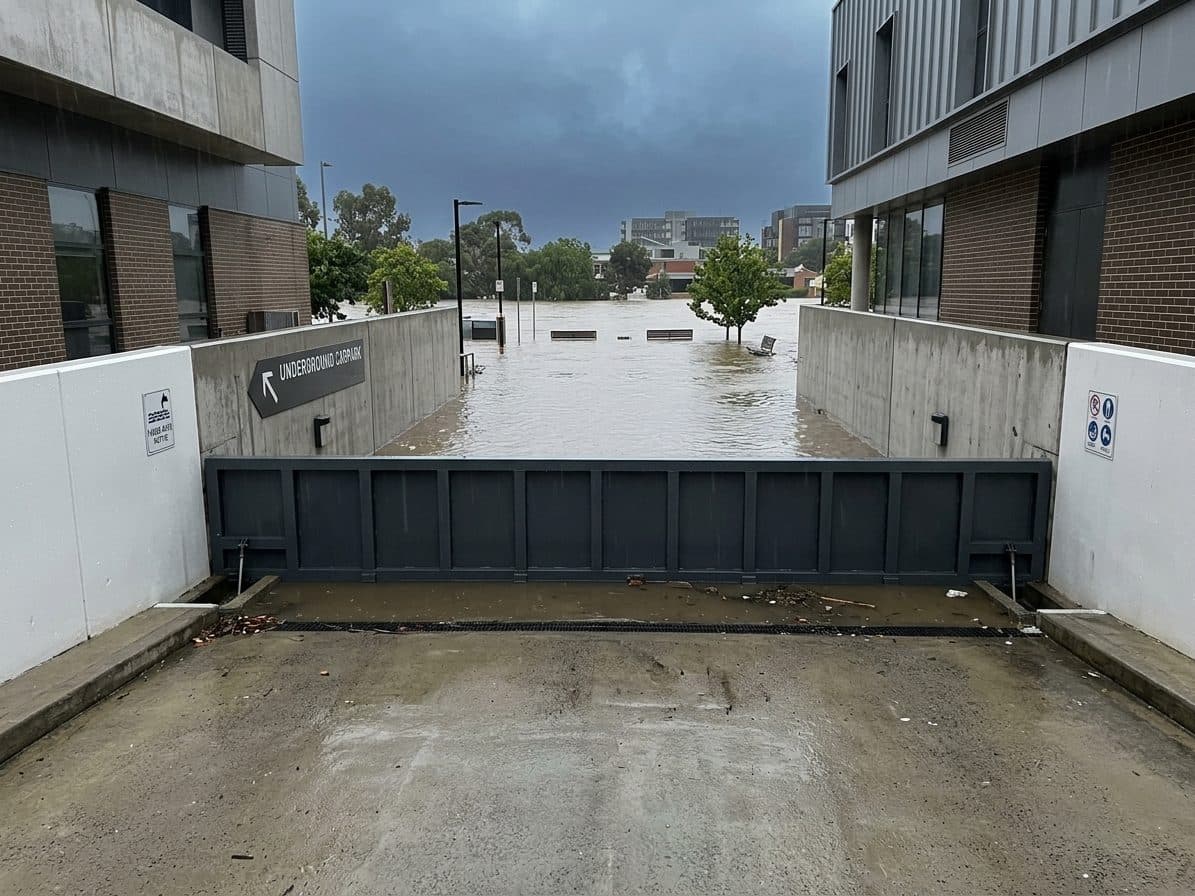
Hospitals and critical facilities
An automatic barrier rests flush with the ground and raises on water-level sensing, with remote or central control for lowering and reset.
Automatic flood barriers →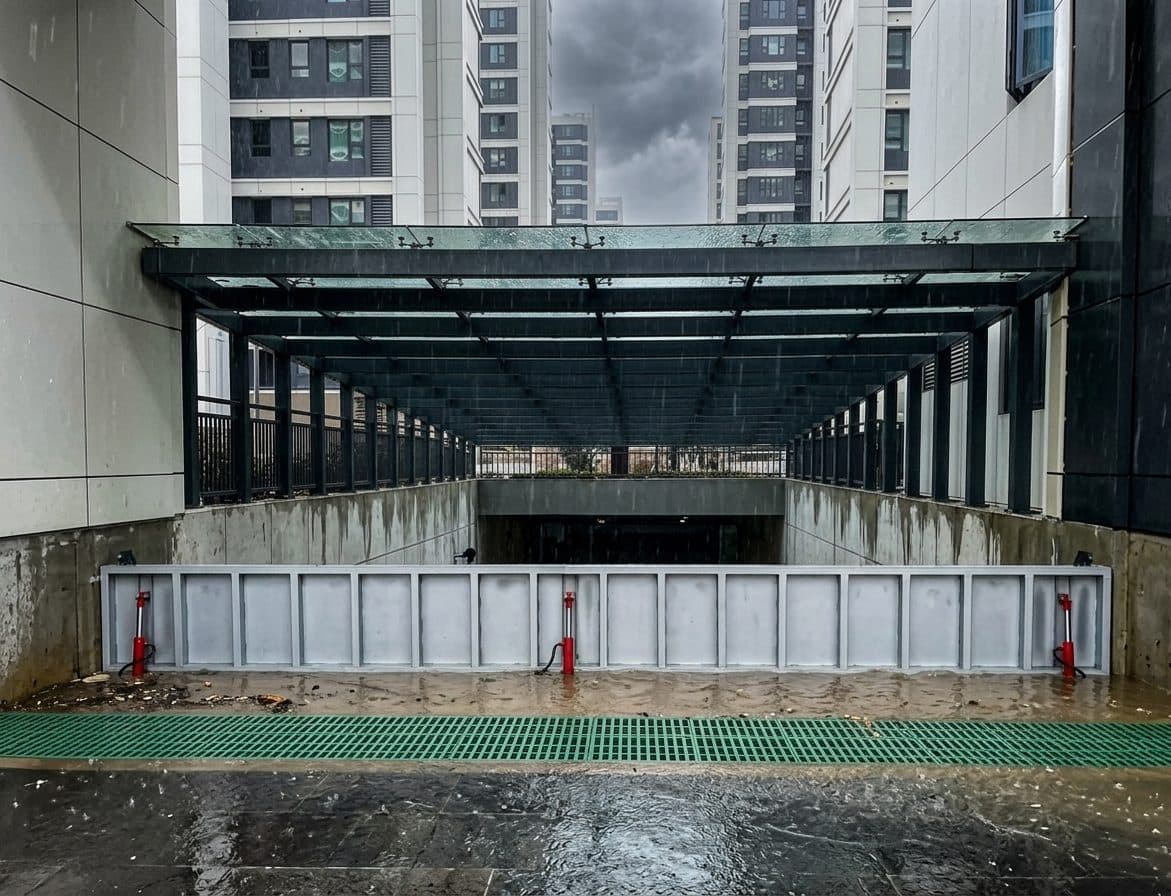
Residential basements
Apartment and mixed-use buildings where residents come and go at all hours. The lowered barrier can be paved to match the surrounding surface.
Automatic flood barriers →Homes and residential
Garages, front doors and gates.
At home, the barrier has to be quick for one person to put in and easy to store for the rest of the year.
Garage doors
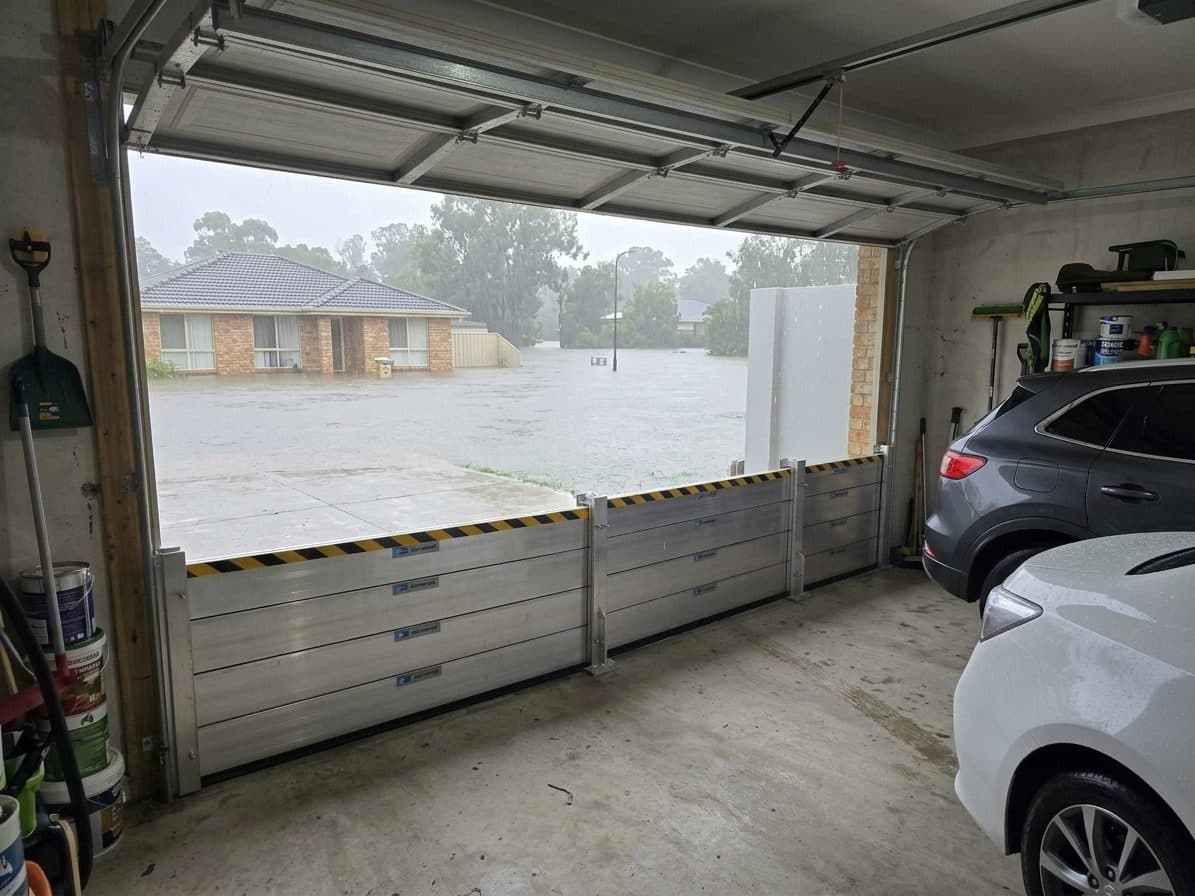
Aluminum panels made to the garage opening drop into their channels in minutes and lift out after the event.
Aluminum flood barriers →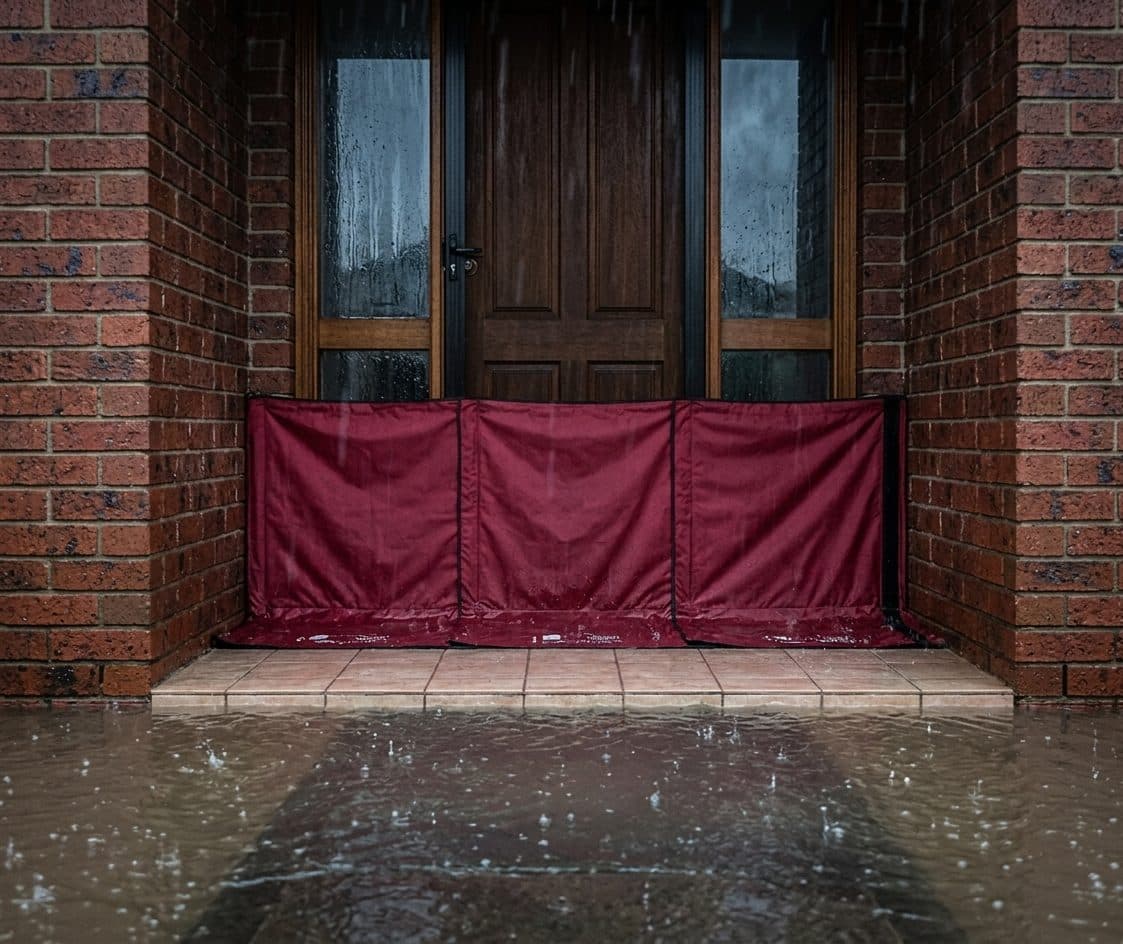
Front doors
A telescopic Oxford barrier adjusts to the doorway and folds flat in a closet between storms.
Oxford barriers →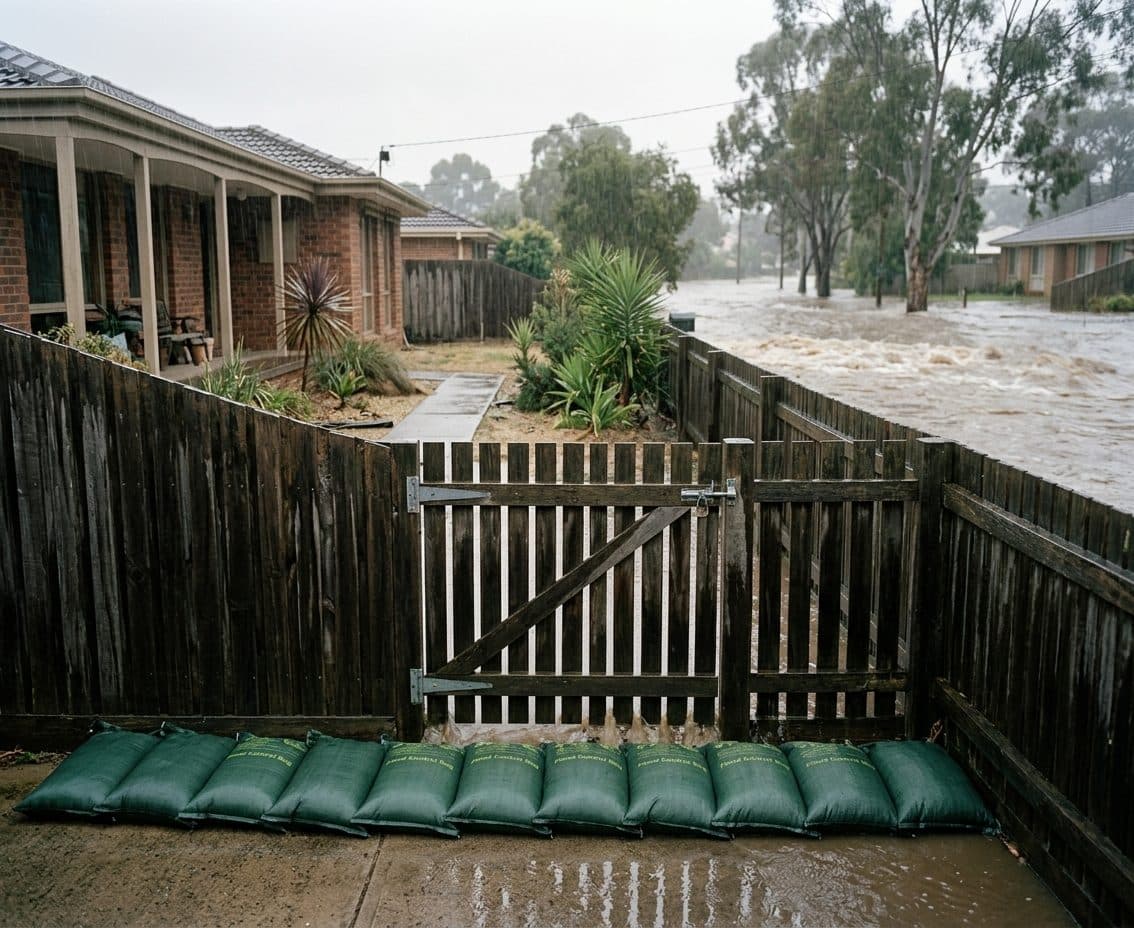
Gates and low entry points
Water-activated sandbags store flat and swell on contact with water to fill gaps a rigid barrier cannot seat against.
Water-activated sandbags →Waterfronts and public realm
Riverside paths, parks and embankments.
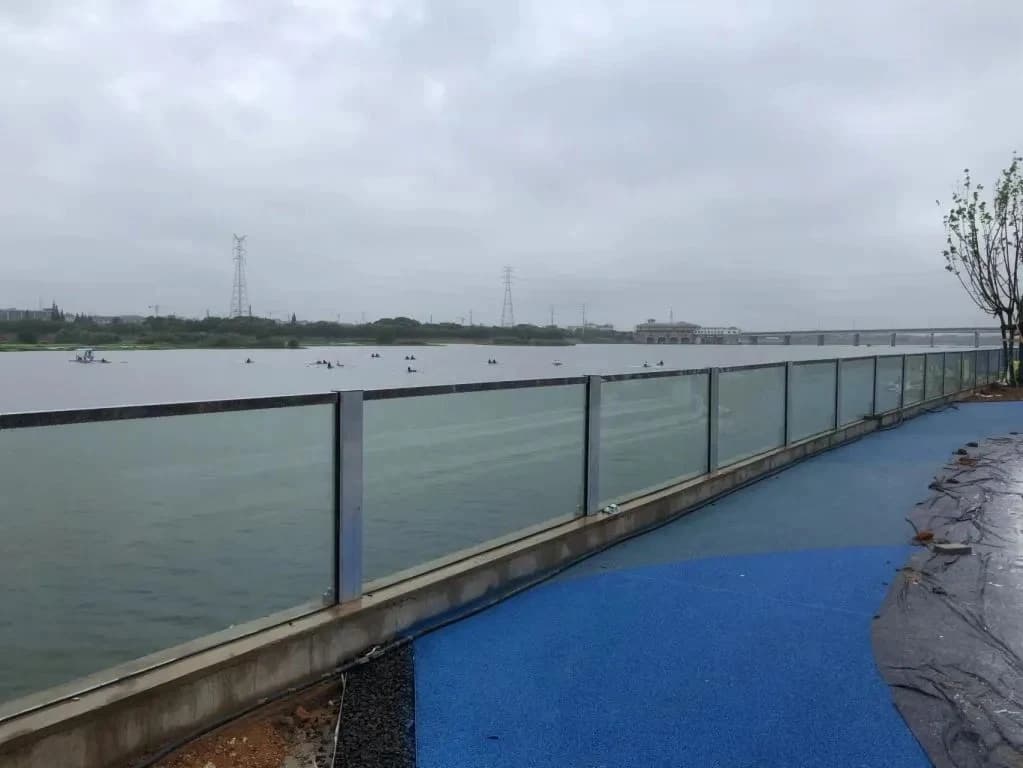
Where a solid wall would block the view, a fixed glass flood wall keeps the water in sight and needs nothing put in place before a flood.
Riverside and lakeside paths
Laminated glass in aluminum frames and posts, with rubber seals at the panel edges, configured for the site.
Glass flood walls →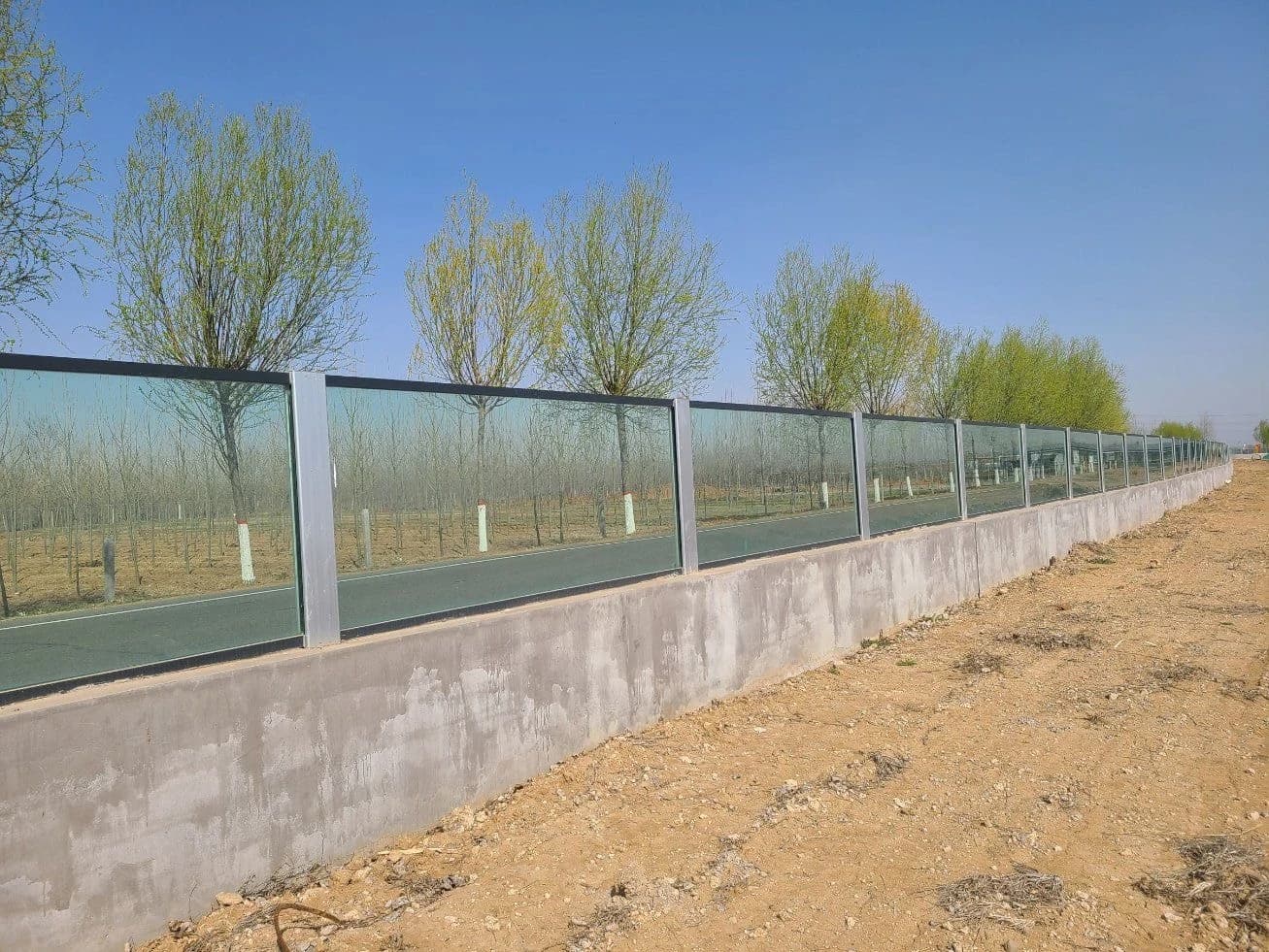
Embankments and promenades
A continuous barrier line fixed to a concrete base or parapet, with foundations and anchors designed for the site.
Glass flood walls →Every site is different. Start with the openings.
Send the opening sizes and a few photos, and we will recommend a product for each opening with a written quote for the whole site.
Request a Quote