
Applications

Flood Protection for Community Buildings and Public Facilities

Community halls, libraries and public facilities often have small budgets, volunteer caretakers and doors that open straight onto the ground. These are the barriers we suggest for stocking ahead of the wet season.

Request a QuoteView Products
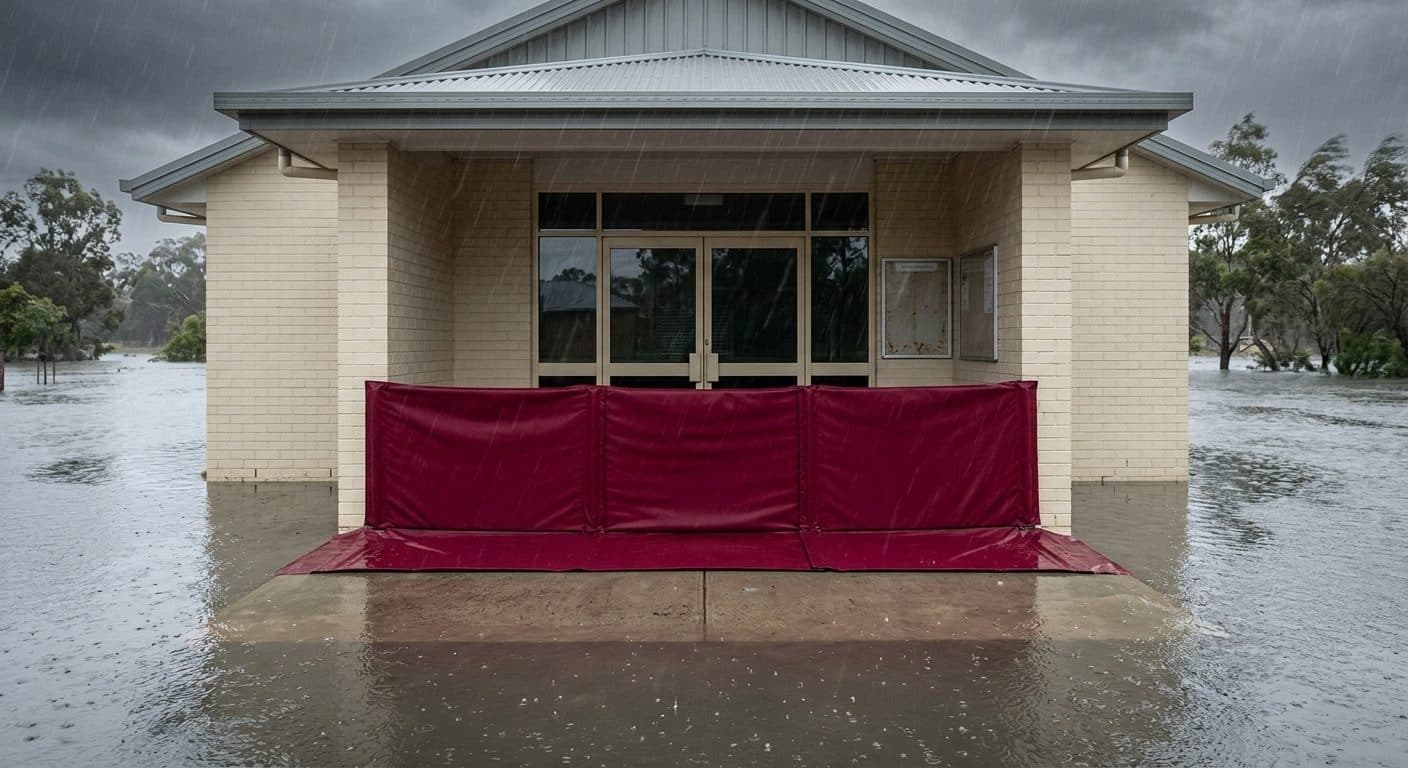
Red fabric flood barrier across the glass doors of a single-story brick hall surrounded by floodwater

Where water gets in

The openings to plan for

  • Main entrance doors with low or no thresholds
  • Side and kitchen doors that open onto paths or grass
  • Gaps under doors and around frames
  • Low points where yard runoff collects against the wall

Barriers that suit this site

Products to consider

Water-Activated Sandbags

Water-Activated Sandbags

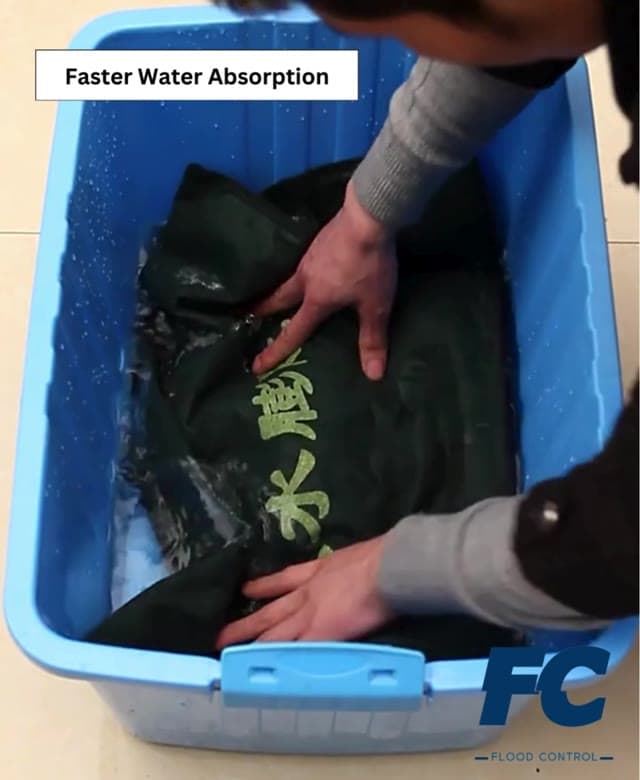
The bags store flat at 270 g (about 9.5 oz) each and swell to 18 to 22 kg (about 40 to 49 lb) on contact with fresh water. They are reusable, can stay in place outdoors after first activation, and hold back and divert water, though some seepage can occur.

Best for: Stockpiles for many buildings

View Water-Activated Sandbags →
ABS Portable Flood Barriers

ABS Portable Flood Barriers

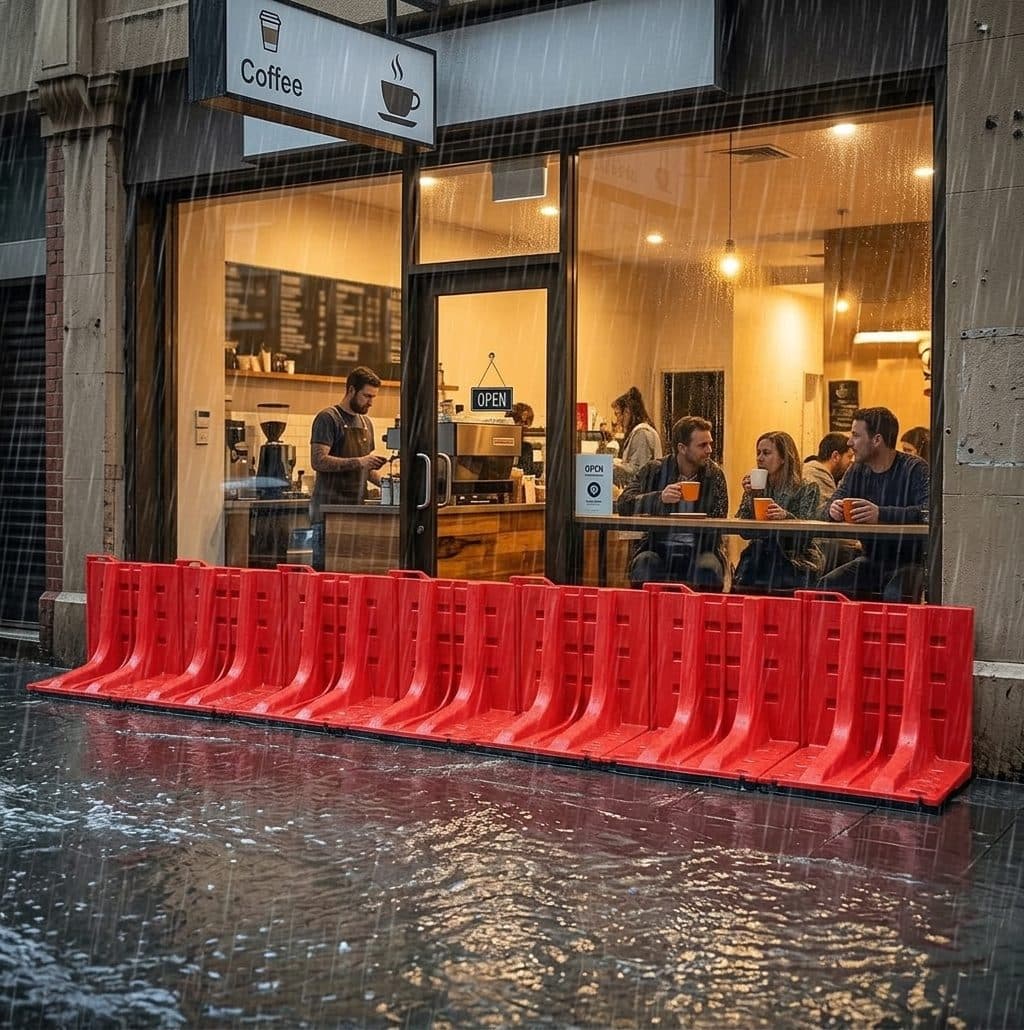
Free-standing L-shaped panels with nothing fixed to the building, locked together by hand. Heights are 750 mm, 1,000 mm and 1,200 mm in packs of 8, and some seepage can occur.

Best for: Wide entrances and roller doors

View ABS Portable Flood Barriers →
Oxford Barriers

Oxford Barriers

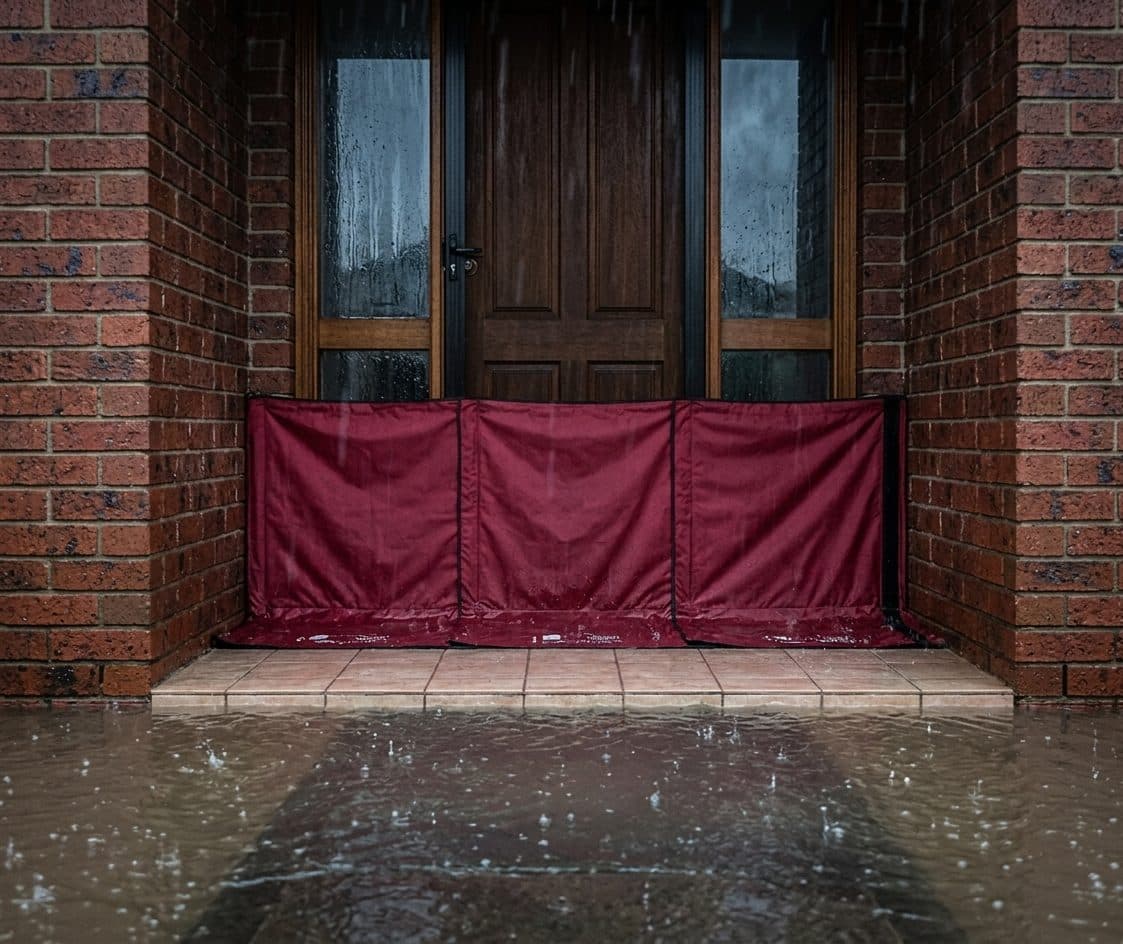
Adjusts from 150 mm to 1,300 mm (about 6 to 51 in) wide and protects up to 900 mm (about 35 in), set up in minutes without tools. Several units connect for wider openings, and it seals best on flat, smooth floors.

Best for: Single and double doors

View Oxford Barriers →

Choosing between them

An organization looking after several halls, libraries or offices often keeps a central stock of water-activated sandbags, because they store flat and need no sand. Bulk quantities are quoted per order.

ABS panels and Oxford barriers need no fixings to the building, which suits heritage or leased premises. Oxford barriers fit single and double doors, and ABS panels cover wider openings.

Tell us how many buildings and doors you need to cover, the widths of the main openings, and where the stock would be kept.

What we need to quote

  • Width and height of each opening
  • Photos of each opening and the ground on both sides
  • How high the water has reached before, or the flood height to plan for
  • Whether power is available at the opening, and what traffic crosses it
  • The city and country of the site
Request a Quote →

FAQ

Questions we hear about community and public buildings

Can volunteers set these barriers up?
Yes. Oxford barriers and ABS panels are placed by hand without tools, and water-activated sandbags only need fresh water to swell. A short run-through before the wet season helps volunteers know where each piece goes.
Do we need to fix anything to the building?
No. All three products are free-standing. That suits heritage buildings and premises where the owner does not allow drilling.
How well do these barriers hold back water?
They are designed to hold back and divert floodwater, and some seepage can occur. Results depend on the floor surface and the depth of water. No barrier prevents all flood damage, so moving valuables off the floor is still worthwhile.

Send the opening sizes and a few photos.

We reply within 1 business day with a recommendation for each opening and a quote for the whole site.

Request a Quote