
Applications

Flood Barriers for Doors and Doorways

At ground level, a home's doors are where floodwater usually finds its way in, under the door and around the frame. These are the barriers we suggest for front doors, back doors and patio openings.

Request a QuoteView Products
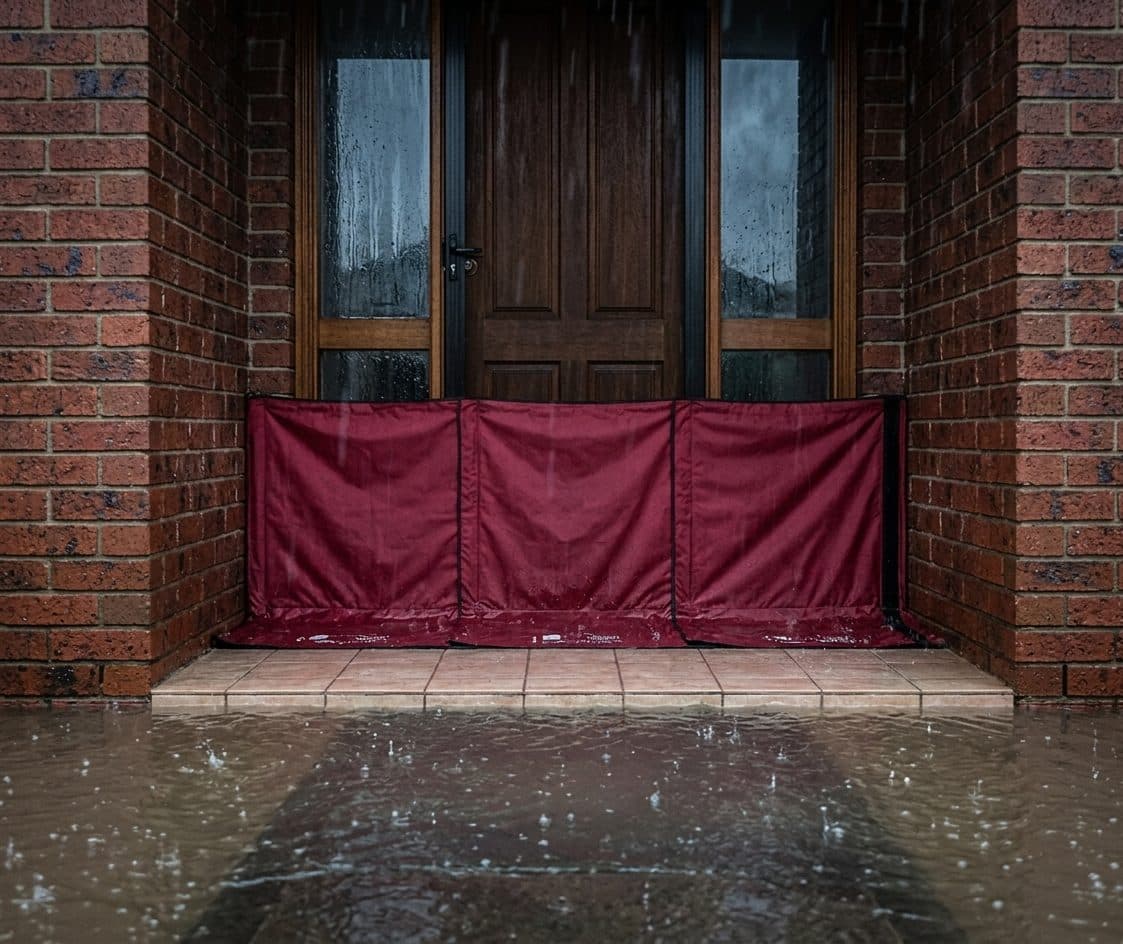
Red fabric flood barrier across a home's front door on a tiled step, with rain and floodwater on the path

Where water gets in

The openings to plan for

  • The gap under the door and across the threshold
  • Around the door frame, where it meets the wall and the floor
  • Sliding and patio doors with low tracks
  • Laundry and garage doors that open into the house

Barriers that suit this site

Products to consider

Oxford Barriers

Oxford Barriers

The telescopic frame adjusts from 15 cm to 130 cm (about 6 to 51 in) to fit most doorways and protects up to 900 mm (about 35 in). It sets up in minutes without tools and folds flat for storage. It seals best on a flat, smooth threshold, and minor seepage can occur on uneven ones.

Best for: Front and back doors

View Oxford Barriers →
Aluminum Flood Barriers

Aluminum Flood Barriers

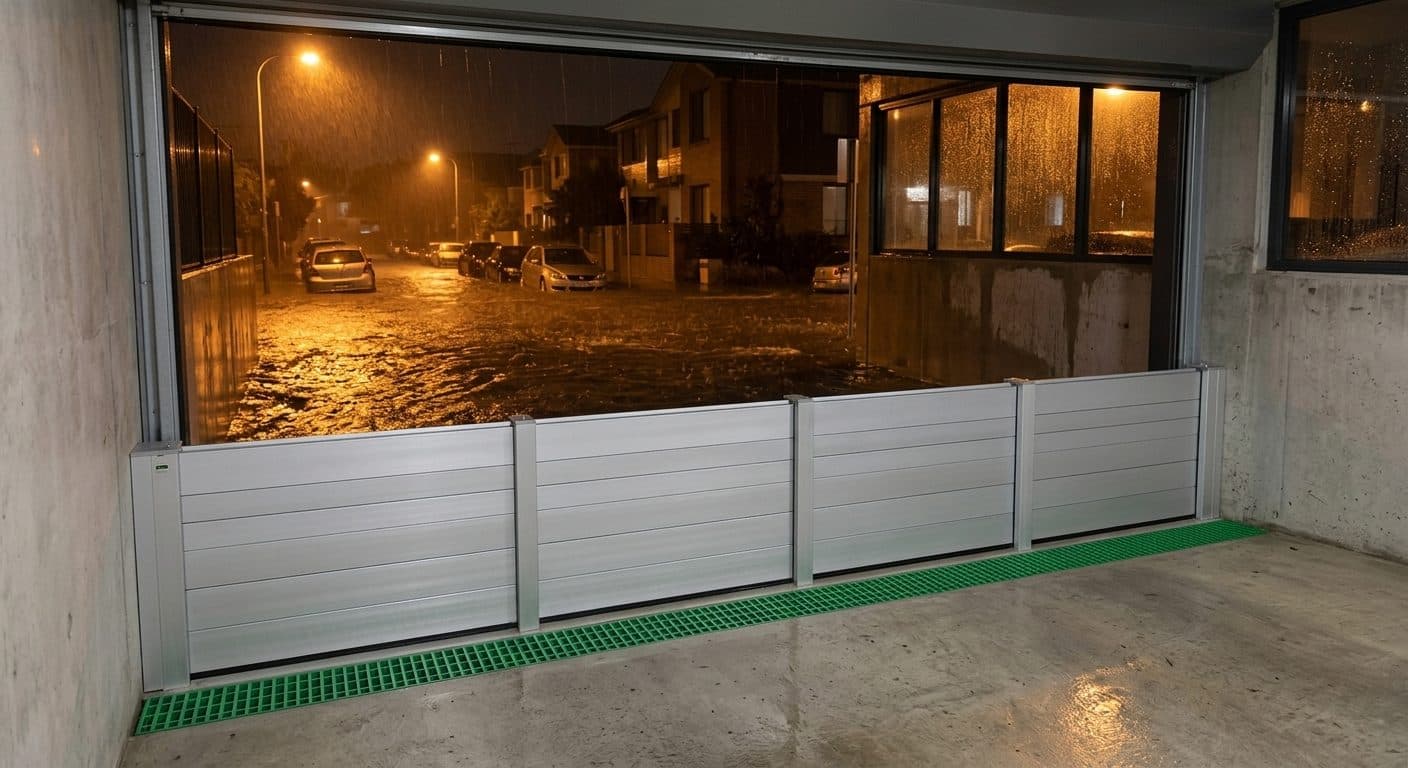
For a wide patio opening or a door that floods often, a set is made to measure for that opening and fitted into side channels. Rubber gaskets and compression seals along the base and side posts are clamped against the frame and floor.

Best for: Wide or frequently flooded doorways

View Aluminum Flood Barriers →
Water-Activated Sandbags

Water-Activated Sandbags

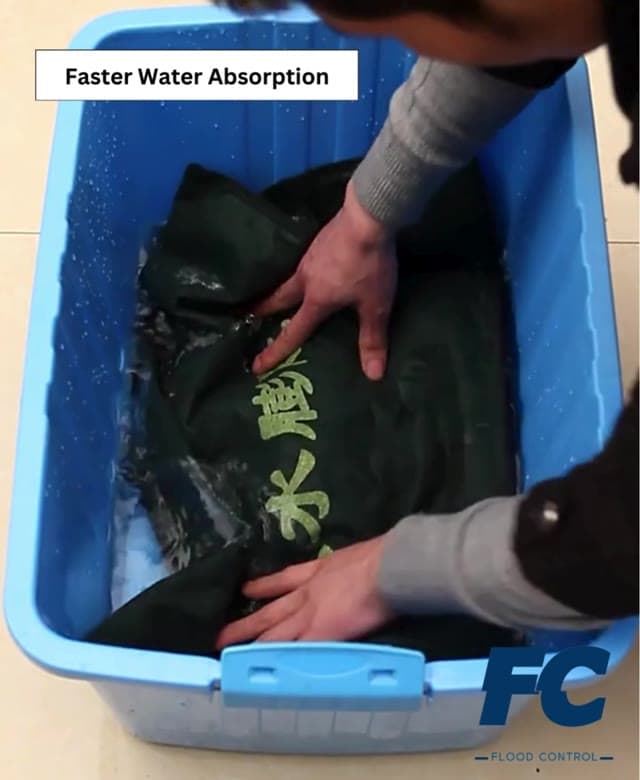
They store flat, so a pack can sit in a cupboard until it is needed, and swell to 18–22 kg (about 40–49 lb) in 2–3 minutes in fresh water. They are reusable and can be left in place outdoors after the first activation.

Best for: Backup and gap filling

View Water-Activated Sandbags →

Choosing between them

For a standard door, an Oxford barrier is the simplest option: no fixings, set up in minutes and stored flat between events. Check that the step or path in front of the door is reasonably flat and smooth, as that is where it seals best.

If the doorway is wider than one Oxford unit, or water reaches it every season, aluminum panels made for that opening are the more permanent option. The side channels stay on the wall and the panels are stored away.

Sandbags work alongside either barrier, at a second door, an air vent or a gap at the edge of the frame. They hold back and divert water, and some seepage can occur.

What we need to quote

  • Width and height of each opening
  • Photos of each opening and the ground on both sides
  • How high the water has reached before, or the flood height to plan for
  • Whether power is available at the opening, and what traffic crosses it
  • The city and country of the site
Request a Quote →

FAQ

Questions we hear about doors and doorways

Will an Oxford barrier fit my front door?
It adjusts from 15 cm to 130 cm (about 6 to 51 in) wide, which covers most single doorways, and units can be connected for wider openings. Measure the opening where the barrier will stand and send it with a photo if you are unsure.
Do I have to drill into the house?
Not for Oxford barriers or sandbags, which need no fixings. Aluminum barriers need side channels fixed either side of the doorway, and those stay in place while the panels are stored.
How many sandbags does a doorway need?
It depends on the width of the door and how high you need to stack them. Each activated bag measures about 600 × 400 × 120 mm (about 24 × 16 × 5 in), so a single row across a 900 mm (about 35 in) door takes two bags laid end to end.

Send the opening sizes and a few photos.

We reply within 1 business day with a recommendation for each opening and a quote for the whole site.

Request a Quote